
In short: Most first-time visitors to Phuket should stay on the west coast. Choose Patong for nightlife and the most choice, Kata or Karon for a lively but calmer beach base close to the Big Buddha, Kamala, Bang Tao or Surin for quieter, more upmarket stays, and Nai Harn or Rawai in the far south for a relaxed feel. Phuket Town has the cheapest rooms and the Old Town, but no beach. The north, around Mai Khao and Nai Yang, is quiet and close to the airport.
Phuket is Thailand’s largest island, 48 km long and up to 21 km wide according to Wikivoyage, and the area you choose shapes your trip more than the hotel does. Driving from one end to the other can take more than an hour. This guide compares the main areas for a first visit. It was updated in November 2026 and replaces an older article at this address.
Some terms. The west coast is where almost all of Phuket’s swimming beaches are. Phuket Town is the provincial capital on the east side. High season is roughly November to April, when the sea on the west coast is calmest.
Where to stay in Phuket on a first visit
There is no single answer. Wikivoyage names five main areas where tourists stay and says Patong is the most popular because of its nightlife, street markets and calm water, though it is not for everyone, especially families. It lists Kata, Karon, Rawai and Nai Yang as quieter choices.
| Area | Best for | Trade-off |
|---|---|---|
| Patong | Nightlife, shopping, most choice | Crowded and loud, especially around Bangla Road |
| Kata and Karon | Families, beaches, Big Buddha | Busy in high season |
| Kamala, Surin, Bang Tao | Quieter, upmarket stays and villas | Fewer cheap options; need transport |
| Nai Harn and Rawai | Relaxed south, island boat trips | Far from the airport |
| Phuket Town | Old Town, food, budget rooms | No beach |
| Mai Khao and Nai Yang | Peace, airport access | Far from the main sights |
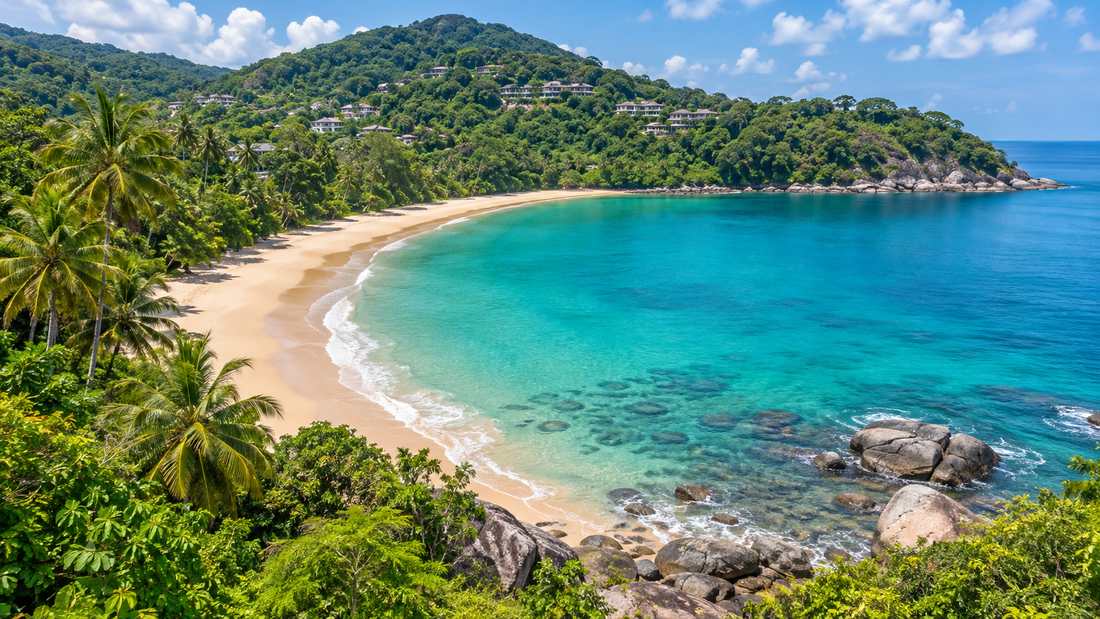
Patong: for nightlife and choice
Patong is Phuket’s largest and most developed resort, on a 3 km beach about 15 km from Phuket Town, according to Wikivoyage’s Patong guide. It has the widest choice of hotels, restaurants and shops, including the Jungceylon mall. Its nightlife centres on Bangla Road, which closes to traffic in the evening; see our Phuket nightlife guide.
Patong suits travellers who want to walk to everything. Light sleepers and families with small children may prefer to stay elsewhere and visit for an evening.
Kata and Karon: beaches near the Big Buddha
Karon is the second most developed beach after Patong, and Kata is a busy, clean beach with good surf in season, with quieter Kata Noi next door, according to Wikivoyage. Both sit just below Nakkerd Hill, so they are the closest beach areas to the Big Buddha and a short drive from Wat Chalong.
These are good all-round choices for a first trip: lively enough in the evening, with plenty of mid-range hotels, but calmer than Patong.
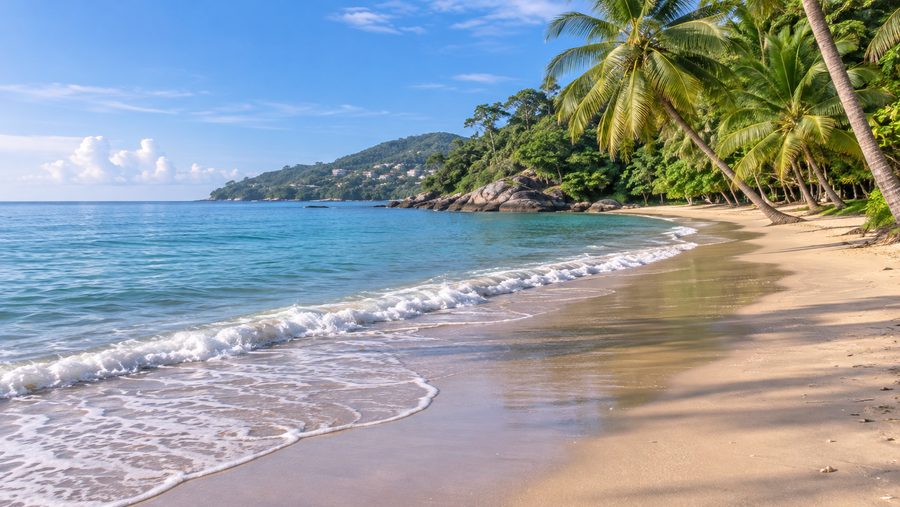
Kamala, Surin and Bang Tao: quieter and upmarket
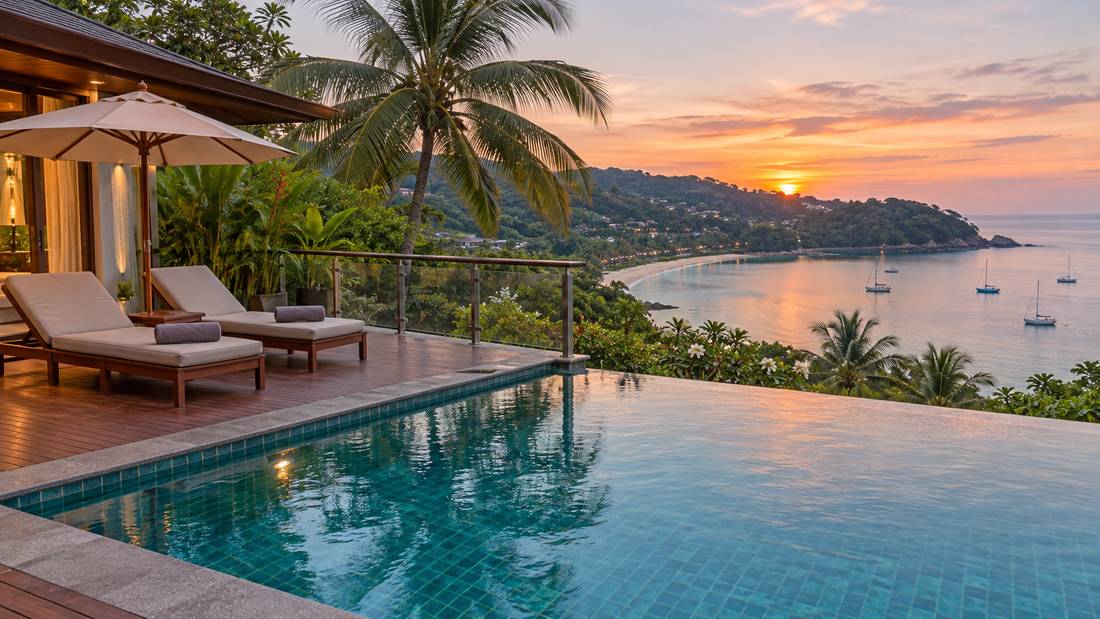
North of Patong, Kamala is a quieter beach, Surin is described by Wikivoyage as an upmarket destination and Bang Tao is a long, very quiet beach. This stretch is known for larger resorts, beach clubs and private villas on the hillsides. You will need taxis or a hired car to get around, but the beaches are less crowded.
Check out this website for a great overview of some of the most luxurious villas, available for rent in Phuket.
Nai Harn and Rawai: the relaxed south
In the far south, Wikivoyage calls Nai Harn a quieter beach, “probably the best”, near the Promthep Cape viewpoint. Rawai is the jumping-off point for boat trips to small islands such as Ko Bon and Ko Hae, and is popular with locals for seafood by the beach. The south is about an hour from the airport.
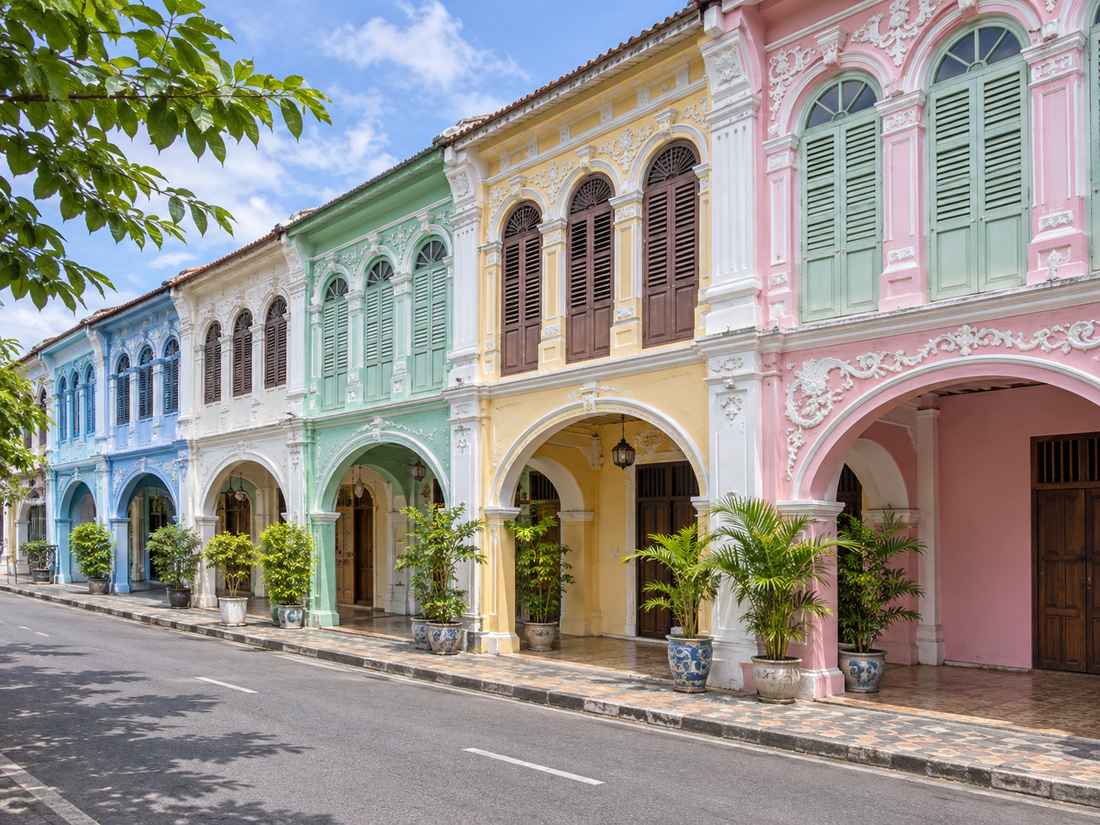
Phuket Town: culture and food
Wikivoyage describes Phuket Town as the administrative centre with the cheapest accommodation. It has no beach, but it has the Sino-Portuguese shophouses of the Old Town, the Sunday Lard Yai walking street on Thalang Road and the Chinese shrines at the heart of the Vegetarian Festival. The airport is about 30 km north.
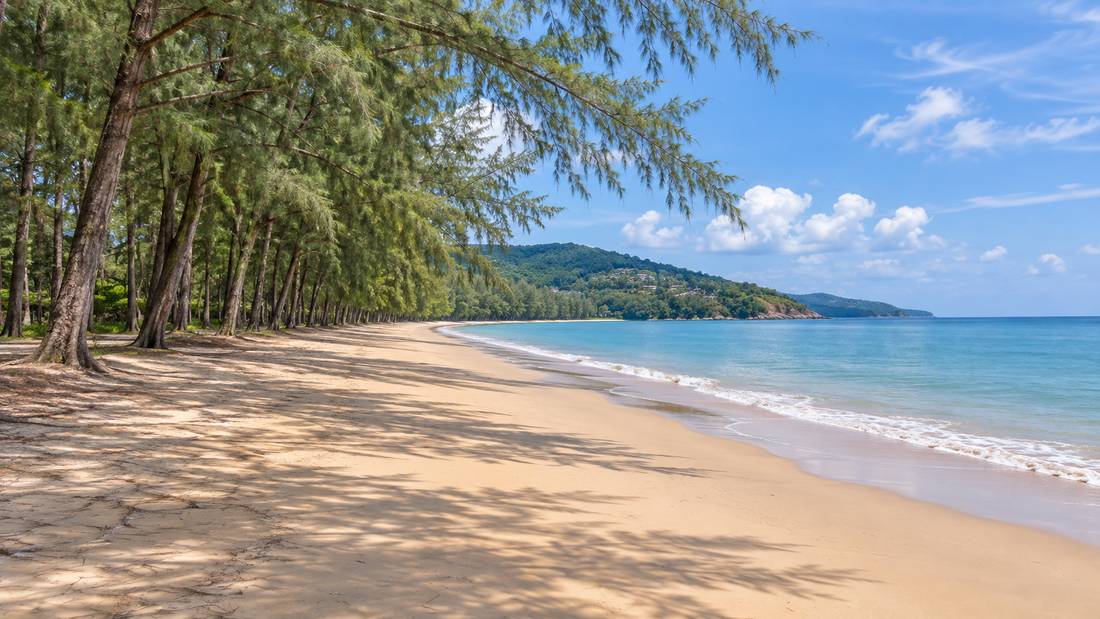
Mai Khao and Nai Yang: near the airport
The north-west coast is the quietest part of the island. Wikivoyage describes Mai Khao as home to many upscale resorts and Thai villages, very quiet and far from it all, and Nai Yang and Nai Thon as two quiet beaches in Sirinat National Park. This area suits a first or last night, or a trip where rest matters more than sightseeing. The temples of Thalang, covered in our guide to Phuket temples, are a short drive away.
Thailand is one of the most luxurious destinations
Thailand is one of the most luxurious tourist destinations globally, and the different districts of the country heavily contribute to the economy’s revenue. Phuket is a good example: tourism has been its main income since the 1980s, when the west-coast beaches of Patong, Karon and Kata began to develop, according to Wikipedia.
Practical tips for choosing
- Book near your priorities: beach, nightlife or temples. Distances on the island are longer than they look.
- In the wet season, roughly May to October, the west coast can have strong currents; Wikivoyage warns that drownings are common, so heed the beach flags.
- The Phuket Smart Bus runs from the airport down the west coast to Rawai, with fares of about 100 baht, according to Wikivoyage.
- Expect hill roads between beaches; scooters are only for experienced riders.
- Prices rise sharply over Christmas, New Year and Chinese New Year, so book early for those dates.
- If you want to see the Vegetarian Festival in October, book a room in or near Phuket Town, where most processions take place.
Key takeaways
- Stay on the west coast for beaches; in Phuket Town for culture and price.
- Patong is busiest and best for nightlife; Kata and Karon are the best all-round first-timer bases.
- Kamala, Surin and Bang Tao are quieter and more upmarket.
- Nai Harn and Rawai suit a relaxed stay in the south.
- Kata and Karon are closest to the Big Buddha.
Common questions
Where should families stay in Phuket?
Kata, Karon and Kamala are popular with families because they are calmer than Patong but still have restaurants and shops.
Is Patong a good place to stay?
Yes, if you want nightlife and walkable shops. It is crowded and noisy, so it suits fewer families.
Which area is closest to the Big Buddha?
Kata, Karon and Chalong, all just below Nakkerd Hill.
Is it better to stay in Phuket Town or on the beach?
Stay on the beach for swimming; stay in Phuket Town for the Old Town, local food and lower prices. Many visitors split their stay.
How far is the airport from the beaches?
Roughly 30 to 60 minutes, depending on the area; the far south is furthest.
How we put this together: area descriptions come mainly from Wikivoyage’s Phuket, Patong and Phuket Town guides, with history from Wikipedia. We do not take payment from hotels and do not rank individual properties. Checked in November 2026.