
In short: The Phuket Vegetarian Festival is the island’s version of the Nine Emperor Gods festival, held for nine days from the first day of the ninth Chinese lunar month. In 2026 it ran from 10 to 18 October. Devotees dress in white, keep a strict meat-free diet and gather at more than 40 Chinese shrines, led by Jui Tui and Bang Neow in Phuket Town and Kathu, where the festival began in 1825. Processions, fire-walking and firecrackers fill the streets.
This guide explains the festival and the shrines behind it, for visitors who want to understand what they are seeing. It was written in November 2026, after the 2026 festival. Dates follow the lunar calendar and change every year. Some ceremonies include spirit mediums piercing their cheeks; we describe this briefly but do not show it.
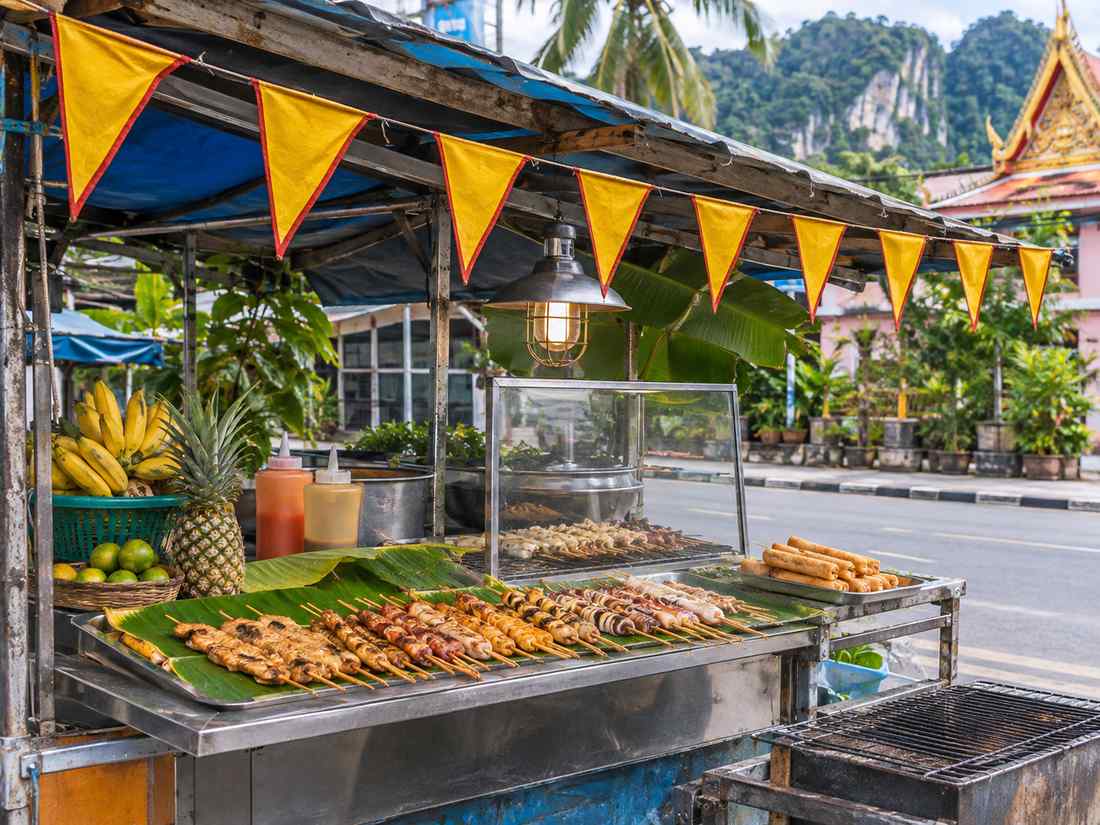
Some terms. The Nine Emperor Gods are Taoist deities honoured in the ninth lunar month. Jay (Thai: jae) is the strict vegan diet kept during the festival, shown by yellow flags with red lettering. Ma song are spirit mediums believed to be entered by the gods. The Go Teng is a tall pole raised at each shrine to invite the gods.
What is the Phuket Vegetarian Festival?
Wikipedia describes it as the local Chinese community’s name for the Nine Emperor Gods festival, beginning on the first day of the ninth Chinese lunar month. Participants follow a vegetarian diet, keep a set of precepts and wear white. The festival is known for fire-walking and blade ladders as well as for its food.
It is a religious event first and a tourist attraction second. The Thai government’s Public Relations Department expected more than 140,000 visitors and about 1.4 billion baht of spending in 2026.
How did the festival begin?
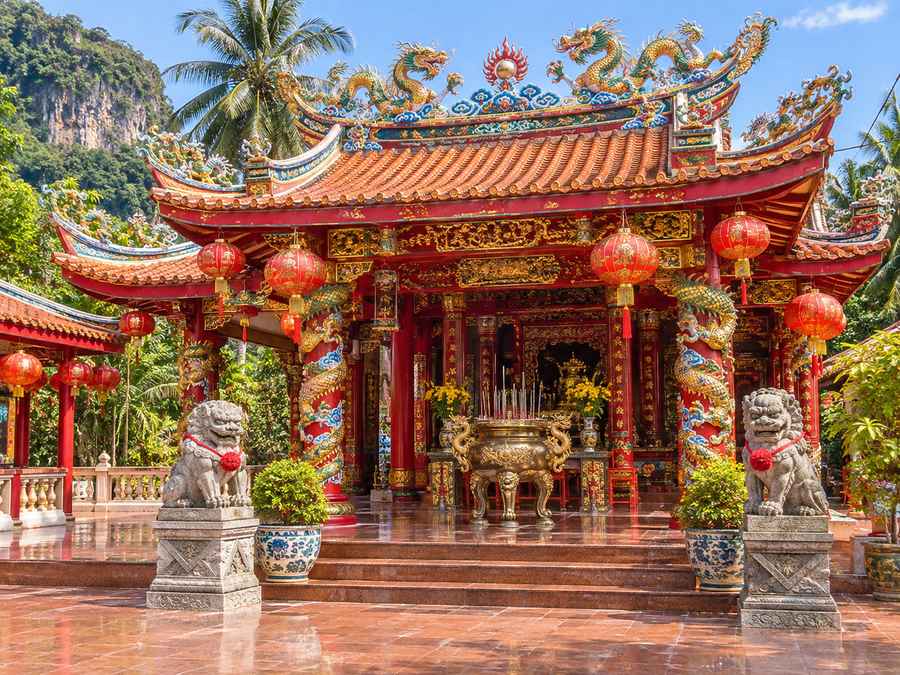
The festival is traced to Kathu, then the centre of tin mining between Phuket Town and Patong. The usual account is that in 1825 a visiting Chinese opera troupe fell ill during an epidemic, which sources variously describe as cholera or malaria, and recovered after performing rites for the Nine Emperor Gods. National Geographic and Travelfish both tell versions of this story.
The festival grew with Phuket’s Hokkien Chinese community, and with the Peranakan “Phuket Baba” families who descend from them, many of whom came to work in tin. Wikipedia notes their links to the Peranakan communities of Penang and Malacca.
Phuket Vegetarian Festival 2026 dates
The Public Relations Department announced the 2026 schedule: the Go Teng pole raising on 9 October at 17:09, the observance from 10 to 18 October, and processions from 11 to 18 October, including new night processions. More than 40 shrines took part. The Tourism Authority of Thailand listed the same dates.
| Date (2026) | Event |
|---|---|
| 9 October, 17:09 | Go Teng pole raised to invite the gods |
| 10 October | Festival opens |
| 11 to 18 October | Daily processions from different shrines |
| 16 October | Jui Tui procession, Phuket Town (per Phuket 101) |
| 17 October | Kathu procession (per Phuket 101) |
| 18 October | Closing night and send-off of the gods |
For future years, expect late September to October. Confirm the year’s dates with TAT or the Phuket provincial office.
The main shrines
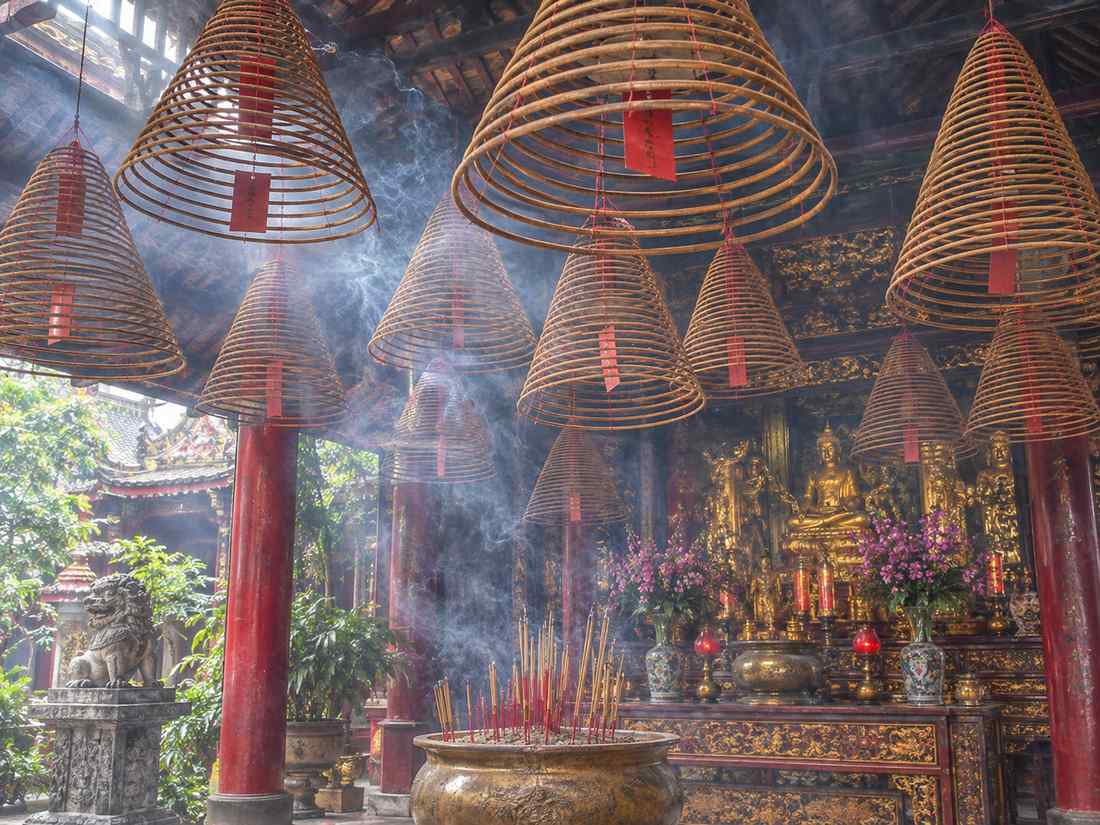
Jui Tui Shrine, off Ranong Road in Phuket Town, is the busiest during the festival. Phuket 101 describes it as where the festival begins, with processions forming there before setting off. Next door, the smaller Put Jaw Shrine (Kuan Im Teng) is one of the oldest Chinese temples in town.
Bang Neow Shrine in Phuket Town is the other major shrine in town. Kathu Shrine, Lai Thu Tao Bo Keng, is where the festival began; Phuket 101 notes that it holds its fire-walk in daylight, earlier than any other shrine. In Cherng Talay near Bang Tao, the Sam Ong Hu shrine, founded in 1901, carries processions out to the west-coast beaches.
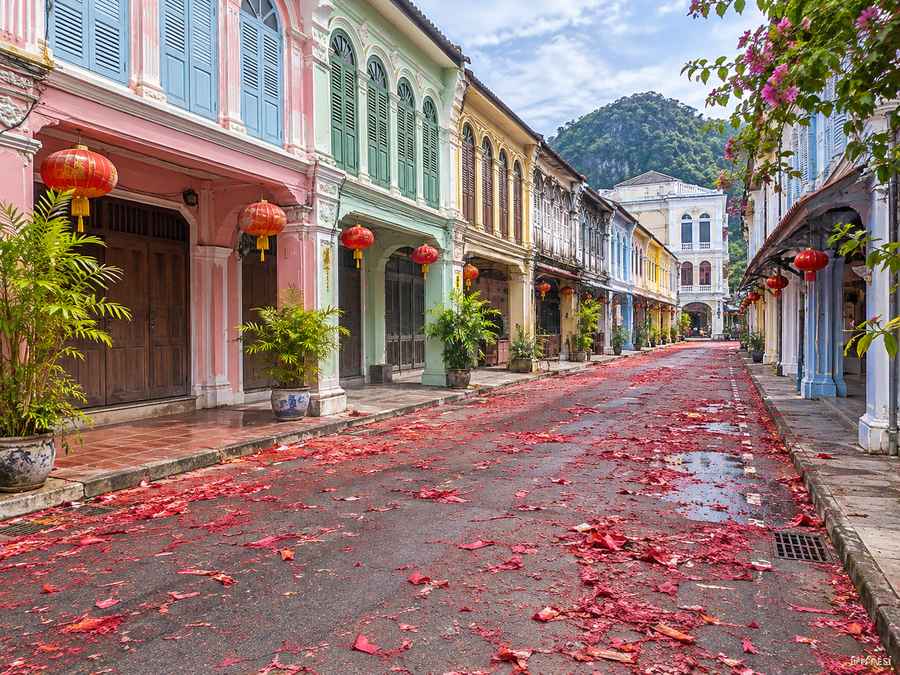
Outside festival time, the Shrine of the Serene Light, an 1891 family shrine in a courtyard off Phang Nga Road, is a quiet stop on an Old Town walk.
What happens during the festival
Each morning a different shrine leads a procession through the streets, with devotees in white, drums, carried shrines and long strings of firecrackers. Shopkeepers set up altars outside their doors. In the evenings some shrines hold fire-walking and the “bridge crossing”, a blessing to lift bad luck. The festival closes with a send-off of the gods on the final night, when the last procession takes the gods to the sea at Saphan Hin on the eastern edge of Phuket Town, according to Phuket 101. The Go Teng poles come down the next day.
Some ma song walk with skewers or blades through their cheeks. This is a devotional act and is shown on many news pictures. If you would rather not see it, watch the evening ceremonies or the food stalls instead.
Food is the easiest way to take part. Stalls with yellow flags sell jay food across Phuket Town, from noodles to mock-meat dishes, and many restaurants switch their menus for the nine days.
How to watch respectfully
- Wear white if you can, and closed shoes.
- Bring ear plugs; the firecrackers are very loud.
- Stand back from processions and never block the path of a ma song.
- Ask before photographing people at prayer.
- Avoid meat, alcohol and loud behaviour near the shrines.
Most events are in and around Phuket Town, so a hotel in or near the Old Town makes early-morning processions easier. Our guide to where to stay in Phuket compares the areas. For Phuket’s Buddhist temples, see Wat Chalong and our guide to other temples.
Key takeaways
- The festival honours the Nine Emperor Gods over nine days in the ninth lunar month.
- In 2026 it ran from 10 to 18 October, across more than 40 shrines.
- It is traced to an opera troupe in Kathu in 1825.
- Jui Tui and Bang Neow in Phuket Town and the Kathu shrine are the main centres.
- Wear white, bring ear plugs and keep a respectful distance.
Common questions
When is the Phuket Vegetarian Festival?
It starts on the first day of the ninth Chinese lunar month and lasts nine days. In 2026 that was 10 to 18 October.
Is the Vegetarian Festival free?
Yes. Processions and shrine visits are free. You pay only for food.
Can tourists take part?
Yes. Visitors can wear white, eat jay food and watch the processions, as long as they follow the shrine rules.
Is the festival suitable for children?
The food stalls and evening ceremonies are, with ear protection. The morning processions can be very loud and graphic.
What does the yellow flag mean?
A yellow flag with red lettering marks a stall or restaurant serving jay, the strict vegetarian festival food.
How we put this together: dates come from the Thai government’s Public Relations Department and TAT; shrine details from Phuket 101; history from Wikipedia, National Geographic and Travelfish. Per-shrine procession days are as listed by Phuket 101 for 2026. Checked in November 2026.
Sources
- Public Relations Department: Phuket Vegetarian Festival 2026 schedule
- Public Relations Department: visitor and spending forecast
- Tourism Authority of Thailand: Phuket Vegetarian Festival 2026
- National Geographic: Phuket Vegetarian Festival
- Travelfish: Phuket Vegetarian Festival
- Phuket 101: Jui Tui Shrine
- Phuket 101: Vegetarian Festival 2026 schedule
- Wikipedia: Phuket province