
In short: Wat Chalong, officially Wat Chaiyathararam, is widely described as the most important of Phuket’s Buddhist temples. It honours two monks, Luang Pho Chaem and Luang Pho Chuang, who helped the people of Chalong during the 1876 uprising of Chinese tin miners. Its tall Grand Pagoda is said to hold a fragment of the Buddha’s bone. The temple is on Chao Fa Road in Chalong, about 15 minutes’ drive from the Big Buddha, and entry is free.
Wat Chalong is the temple most visitors see first in Phuket, often on the same trip as the Big Buddha. This guide explains its history, what to look for and how to visit respectfully. It was written in November 2026 from the sources listed below.
Some terms. Luang Pho means “venerable father” and is a title for senior, respected monks. A chedi is a pagoda or stupa that holds relics. The Ang Yi (also Angyee) were Chinese secret societies whose members led the 1876 uprising. Ubosot is the ordination hall of a temple.
Why is Wat Chalong so important?
Wikipedia describes Wat Chalong as the most important of Phuket’s 29 Buddhist temples and gives its official name as Wat Chaiyathararam (Wikipedia: Wat Chalong). Its importance comes from the two monks it honours rather than from its age or size. Phuket’s provincial slogan ends with the words “Virtue of Luang Pho Chaem”, which shows how central the temple’s first famous abbot is to local identity (Wikipedia: Phuket province).
The Tourism Authority of Thailand calls it a centre of the faith of the Phuket people. It says Luang Pho Chaem mastered insight meditation and traditional medicine, and that King Rama V later gave him an ecclesiastical title and rank as a monk dean of Mueang Phuket.
Luang Pho Chaem and the 1876 uprising
In 1876 Chinese labourers in Phuket’s tin mines rose up. Wikipedia links the unrest to falling tin prices and tough tax policies at the time. The Phuket News describes the riots by the Angyee societies and the role of Wat Chalong in sheltering people from the fighting.
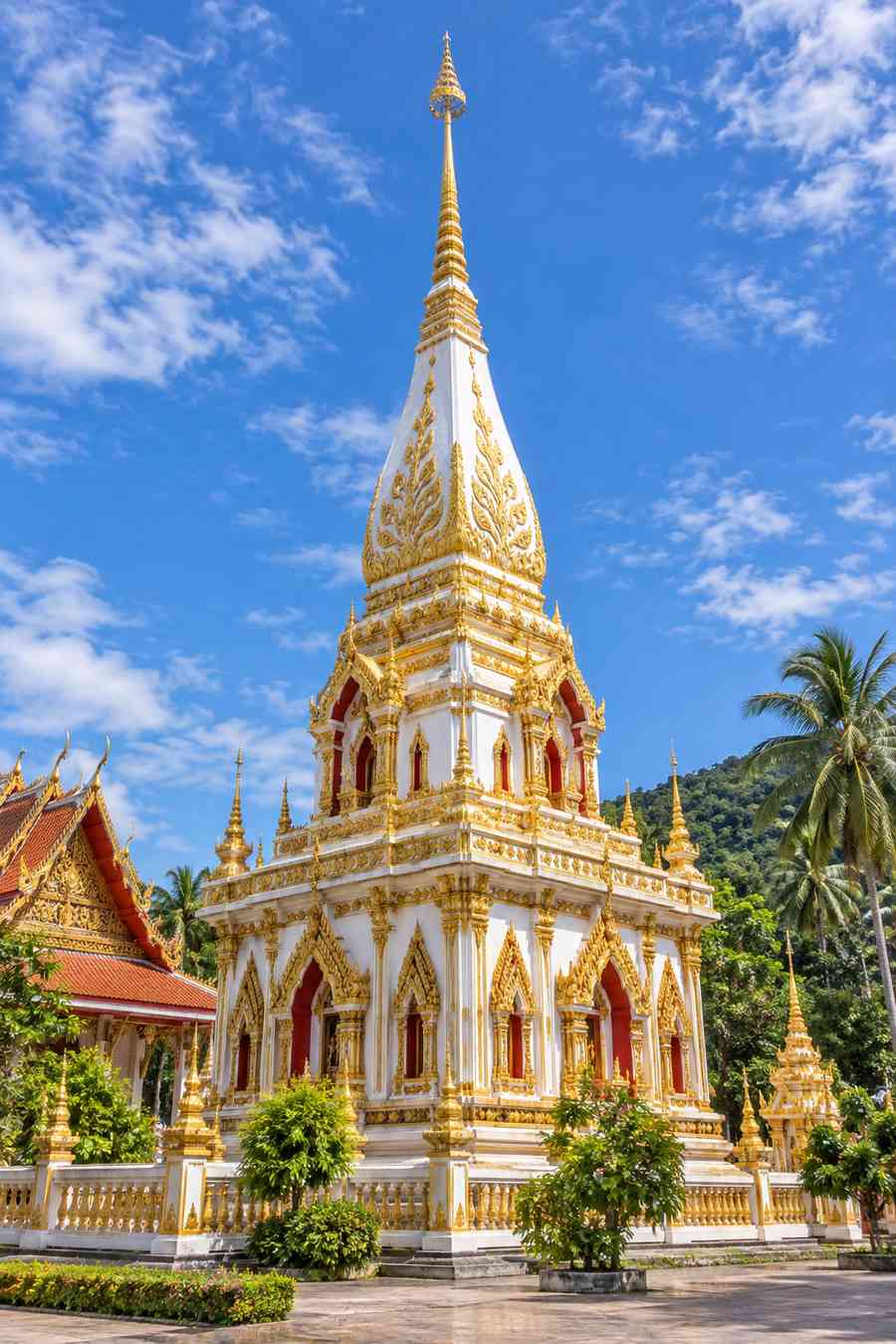
The temple’s two monks, Luang Pho Chaem and Luang Pho Chuang, are remembered for treating the wounded with herbal medicine and for supporting local people. The Tourism Authority of Thailand says Luang Pho Chaem gave protective cloth charms to the men who defended the area. Today his statue, and those of other revered monks, are covered with thin gold leaf pressed on by worshippers.
The Grand Pagoda
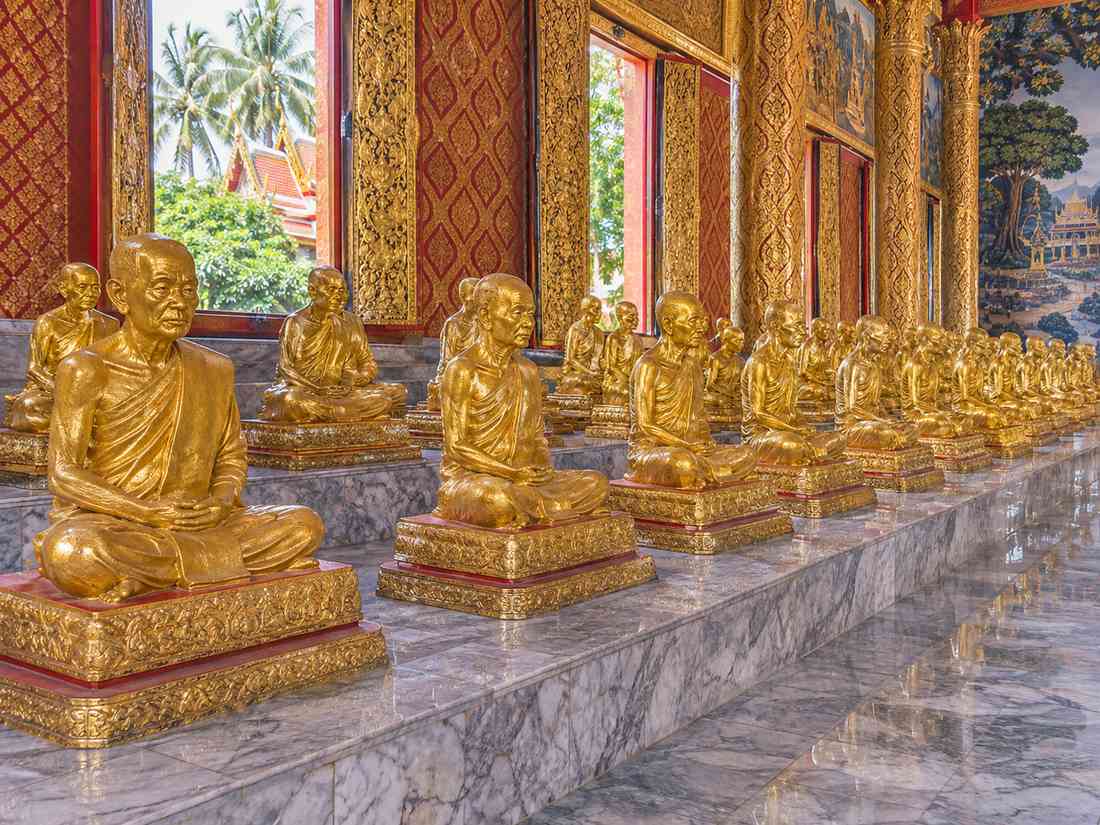
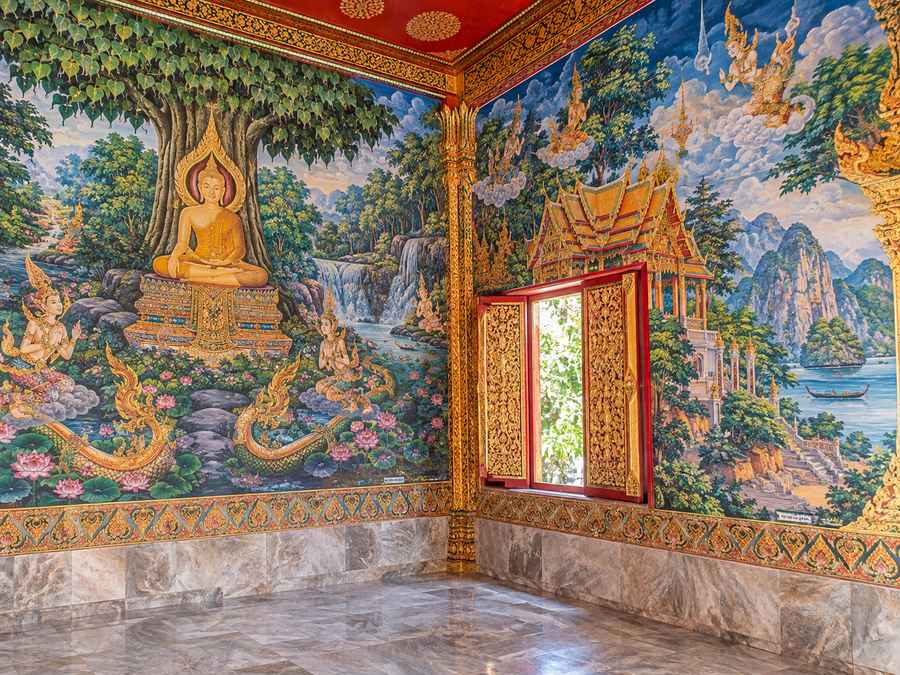
The most striking building is the Grand Pagoda, a tall chedi decorated inside with wall paintings of the life of the Buddha. It is said to contain a splinter of the Buddha’s bone, as described by the Bangkok Airways travel blog. Sources give its height as around 60 metres. Inside, stairs lead up through several levels with Buddha images and displays, and the upper level has views across the temple grounds.
What to see at Wat Chalong
| Building or feature | What it is |
|---|---|
| Grand Pagoda | Tall chedi with murals and a bone relic of the Buddha |
| Main hall | Gold-leafed statues of Luang Pho Chaem and Luang Pho Chuang |
| Ordination hall (ubosot) | Used for ceremonies; visitors should keep quiet |
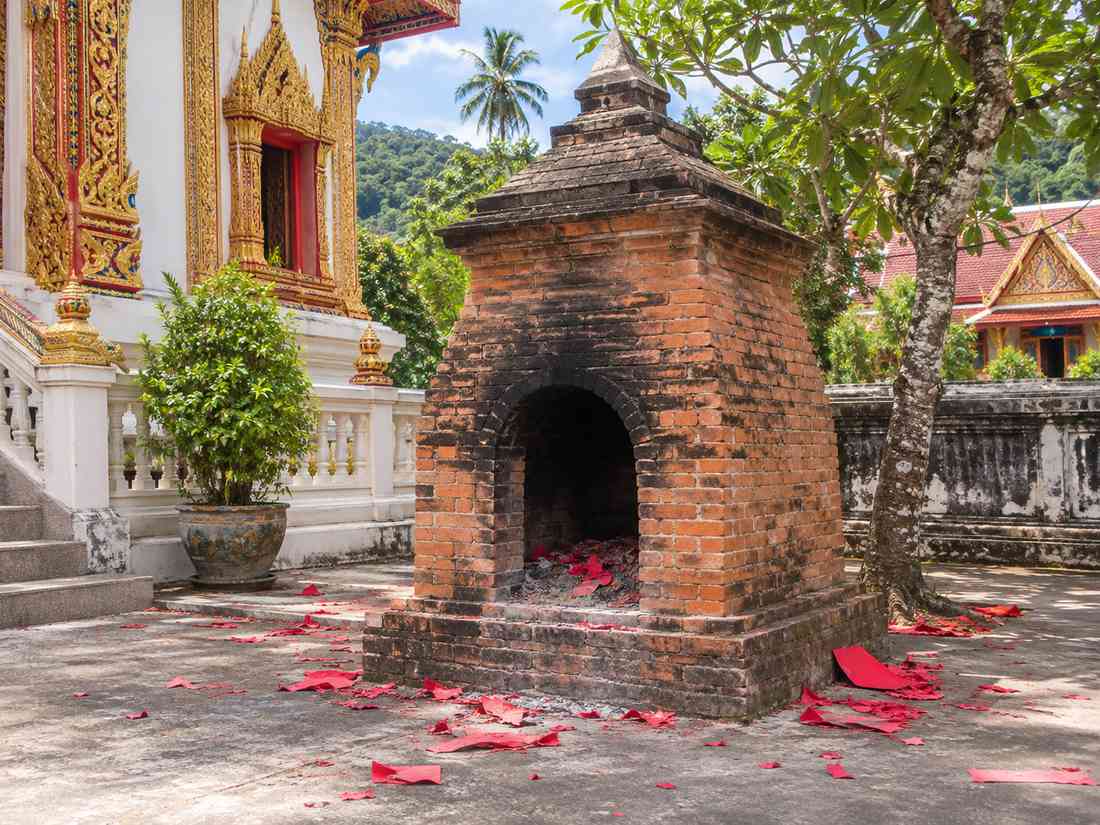
| Firecracker kiln | Where worshippers set off firecrackers to give thanks |
| Temple grounds | Gardens, smaller shrines and stalls selling offerings |
You will often hear bursts of firecrackers. Local worshippers set them off to give thanks when they believe a prayer has been answered. They are let off in a brick kiln near the main hall built for the purpose, as Phuket 101 describes, so there is no need for alarm.
Offerings and how to take part
Visitors are welcome to join in as well as watch. Stalls near the entrance sell three main kinds of offering, according to Phuket Spirit: strings of firecrackers, small squares of gold leaf, and sets of lotus flowers, incense and candles. Gold leaf is pressed onto the statues of the monks as an act of merit, which is why they look slightly rough and glittering up close. Lotus flowers and incense are left at the altars.
None of this is required, and prices are low. If you take part, use your right hand, keep your head lower than the statues where you can and leave quietly once you have made your offering.
Visiting Wat Chalong
The temple is on Chao Fa Road in Chalong Subdistrict, Mueang Phuket District, according to the Tourism Authority of Thailand. Visit Thailand Today puts it about 15 minutes by car from both Phuket Old Town and the Big Buddha, and about 25 minutes from Patong. Entry is free and the temple is open daily from 07:00 to 17:00. Most visitors spend 45 minutes to an hour.
The dress rules are the same as at any Thai temple: cover shoulders and knees, take off shoes before entering halls, speak quietly and avoid pointing your feet at Buddha images or monks. Wikipedia notes that a market sometimes spreads into the temple grounds, so the atmosphere can be busier and louder than you might expect, especially at festivals.
Arrive in the morning for cooler temperatures and fewer coach groups. If you plan to visit the Big Buddha the same day, see our Big Buddha visitor guide for hours and the ride back down the hill.
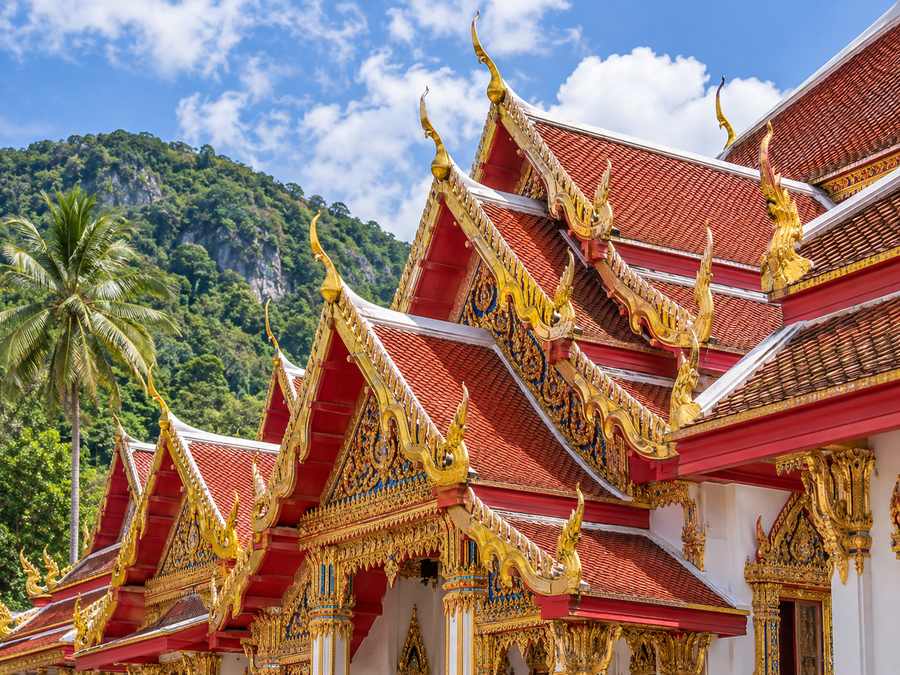
Festivals at Wat Chalong
The temple is busiest during Buddhist holidays and at the Chinese New Year, when local families come to make merit. The Wat Chalong Fair runs for about a week to ten days around the Chinese New Year, with food stalls, rides and nightly stage shows; in 2026 it ran from 16 to 22 February (Phuket 101). Phuket 101 says the fair began in 1933, started by local farmers after the harvest. Dates follow the lunar calendar, so check local listings for the year you travel. For the island’s other big religious event, the Nine Emperor Gods festival, see our guide to the Phuket Vegetarian Festival.
Key takeaways
- Wat Chalong’s official name is Wat Chaiyathararam.
- It honours Luang Pho Chaem and Luang Pho Chuang, who helped local people in the 1876 tin-miners’ uprising.
- The Grand Pagoda is said to hold a fragment of the Buddha’s bone.
- It is on Chao Fa Road, about 15 minutes by car from the Big Buddha. Entry is free, 07:00 to 17:00.
- Cover shoulders and knees, and expect firecrackers.
Common questions
What is the official name of Wat Chalong?
Wat Chaiyathararam. Locals and visitors almost always call it Wat Chalong.
Is there an entry fee at Wat Chalong?
No. Entry is free; donations are welcome.
Why are firecrackers set off at Wat Chalong?
Worshippers set them off to give thanks when they believe a wish or prayer has come true.
How far is Wat Chalong from the Big Buddha?
About 15 minutes by car. Most visitors see both on the same half-day trip.
What is inside the Grand Pagoda?
Murals of the Buddha’s life, Buddha images and, at the top, a relic said to be a fragment of the Buddha’s bone.
How we put this together: history comes from Wikipedia, the Tourism Authority of Thailand and The Phuket News. The pagoda details come from the Bangkok Airways blog and are given as reported. Exact heights and dates vary by source. Checked in November 2026.
Sources
- Wikipedia: Wat Chalong
- Tourism Authority of Thailand: 10 things to do in Phuket
- The Phuket News: The Angyee Chinese riots of 1876
- Bangkok Airways blog: Wat Chalong Temple
- Wikipedia: Phuket province
- Visit Thailand Today: Wat Chalong
- Phuket Spirit: Wat Chalong visiting guide
- Phuket 101: Wat Chalong
- Thairath: Wat Chalong and Luang Pho Chaem