
In short: Phuket Old Town is the historic centre of Phuket Town, on the east side of the island. Its pastel Sino-Portuguese shophouses were built with money from the tin-mining boom of the late 19th and early 20th centuries, by Hokkien Chinese families and the Baba (Peranakan) community that grew from them. Walk Thalang, Dibuk, Krabi and Phang Nga roads and Soi Rommanee, visit Chinpracha House and the Thai Hua Museum, and come on a Sunday evening for the walking street market.
Updated 19 November 2026 by Phuket Big Buddha Guide editors
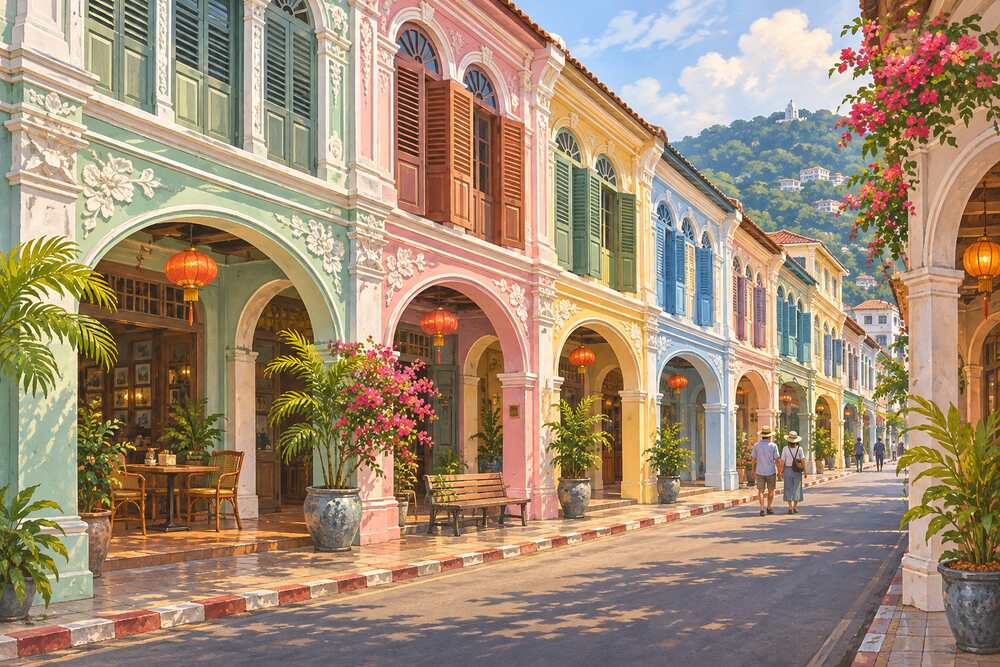
Most visitors to Phuket see the beaches and the Big Buddha. Fewer spend time in Phuket Town, the island’s capital, yet its old quarter is the best place to understand where Phuket’s wealth, food and festivals came from. A few streets of restored shophouses, Chinese shrines and family mansions tell the story of the tin boom that made the island rich long before tourism.
This guide explains the history of Phuket Old Town, the streets and buildings to look for, what to eat, and how to fit a visit around the temples and festivals covered elsewhere on this site, such as the Vegetarian Festival and Phuket’s other temples.
What is Phuket Old Town?
Phuket Old Town is the historic commercial district of Phuket Town. Wikipedia lists its main streets as Thalang, Phang Nga, Krabi, Dibuk and Yaowarat roads, all lined with Sino-Portuguese buildings. It is compact: you can walk the whole quarter in a morning, and most of its sights are within ten minutes of each other.
Key terms:
- Sino-Portuguese: the local name for the building style, with Chinese layouts behind European arches, shutters and stucco.
- Shophouse: a narrow, deep building with a shop at the front and the family home behind and above.
- Five-foot way: the covered arcade along the front of a shophouse row, shading the pavement.
- Baba or Peranakan: the descendants of Chinese immigrants who married local Thai and Malay women.
Tin, Hokkien migrants and the Baba community
Phuket’s wealth came from tin. Wikipedia notes that Europeans were trading Phuket tin from the sixteenth century, and that in the eighteenth century much of the mining was carried out by Hokkien Chinese, who went on to build the old part of the town. The boom peaked in the late nineteenth and early twentieth centuries, when demand from industrial Europe made Phuket one of the world’s important tin producers.
Many Chinese miners and merchants arrived via Penang and Malacca, and they brought the Straits style of building with them. Many married local women. Their descendants, the Baba or Peranakan community, created a culture that is neither fully Chinese nor fully Thai, with its own dress, food and festivals. Phuket’s last commercial tin mines closed in the twentieth century, but the town they paid for survives.
The streets and buildings to see
Thalang Road
Thalang Road is the Old Town’s main street, a long row of two- and three-storey shophouses with arcaded fronts, carved wooden shutters and stucco detail. Many are restored and house cafes, textile shops and small galleries.
Soi Rommanee
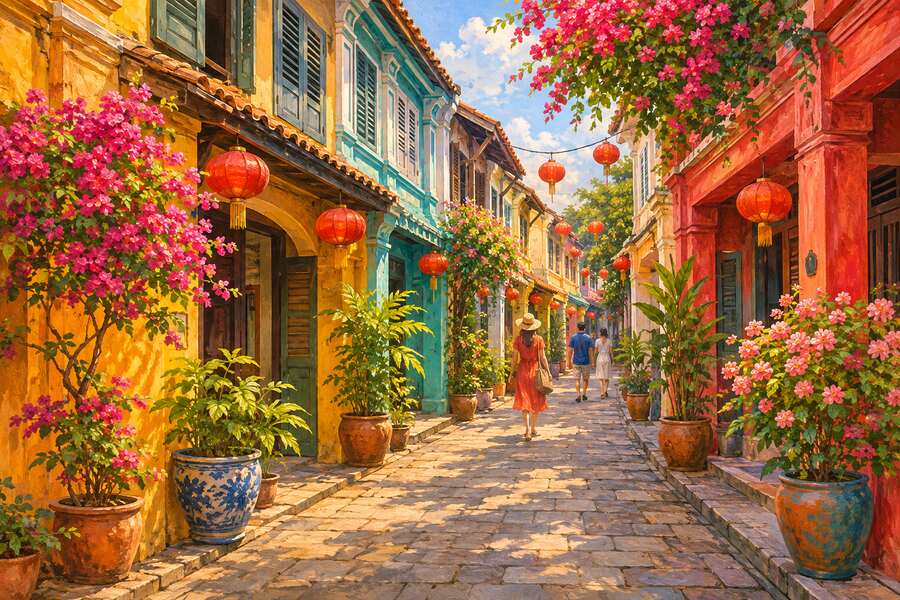
This short lane off Thalang Road is the most photographed spot in the Old Town, with brightly painted shophouses and lanterns. It is busiest in the late afternoon.
Chinpracha House
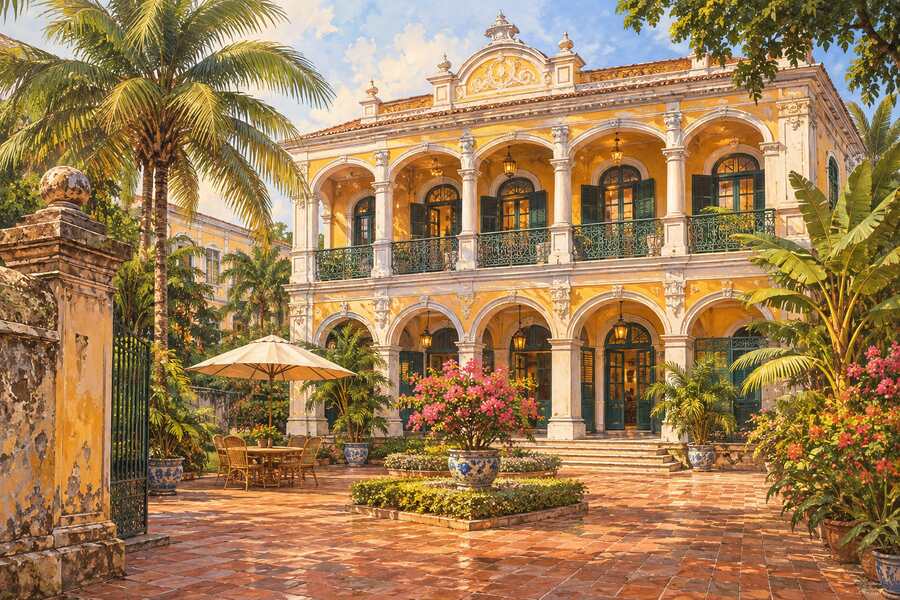
The Thailand Tourism Directory, run by the Department of Tourism, says Chinpracha House was built in 1903 by Phra Phitak Chin Pracha (Tan Ma Xieng), whose family came from Fujian to Phuket in 1854 and ran a tin-mining business. It describes it as the first Sino-Portuguese house in Phuket. The family still owns it, and visitors can see the original furniture, photographs and traditional kitchen.
Thai Hua Museum
On Krabi Road, the Thai Hua Museum occupies a 1934 Chinese-language school building. Its rooms explain Hokkien migration, tin mining, Baba customs and the Vegetarian Festival, which makes it a good first stop before walking the streets.
Chinese shrines in the Old Town
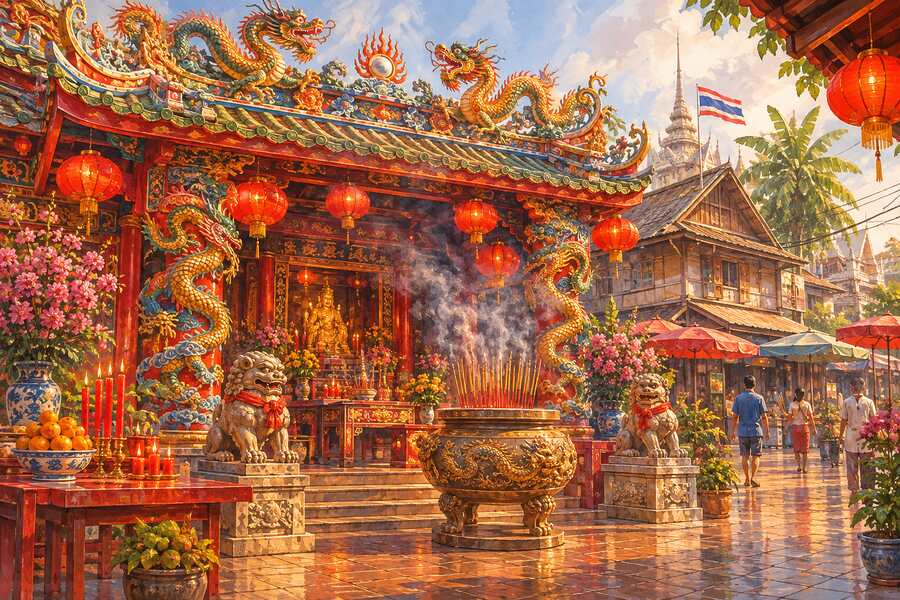
The Old Town has several Chinese shrines, the most important of which are linked to the Nine Emperor Gods. Jui Tui Shrine and Bang Neow Shrine are the busiest during the Vegetarian Festival, when processions leave from them each morning. Outside festival time they are quiet places with carved roofs, lanterns and incense, and visitors are welcome if they dress modestly and keep their voices down.
What to eat in Phuket Old Town
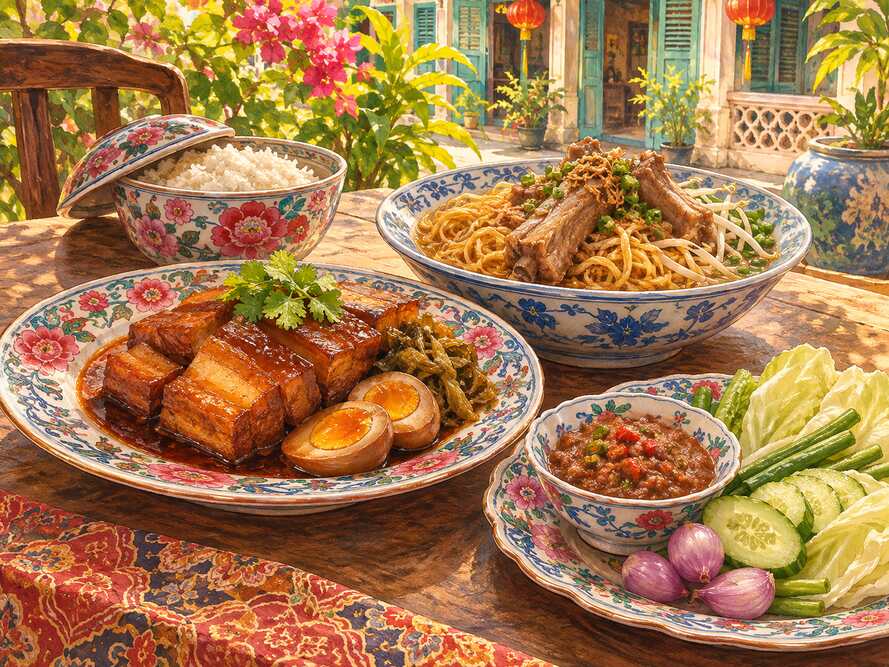
In 2015 UNESCO named Phuket a Creative City of Gastronomy. Thailand’s Public Relations Department says the title recognises a culinary heritage shaped by Hokkien Chinese, Peranakan, Malay and southern Thai influences, and points visitors to the Old Town’s long-established breakfast spots, noodle shops and family-run eateries. The Nation lists dishes from the original application:
- Moo hong: pork belly braised slowly with black pepper and garlic.
- Mee hokkien: stir-fried yellow Hokkien noodles.
- Mee hun: stir-fried rice noodles served with spare-rib soup.
- Nam chub yam: a spicy shrimp-paste relish eaten with vegetables.
- O-aew: a jelly dessert with red beans and shaved ice.
When to visit and the Sunday walking street
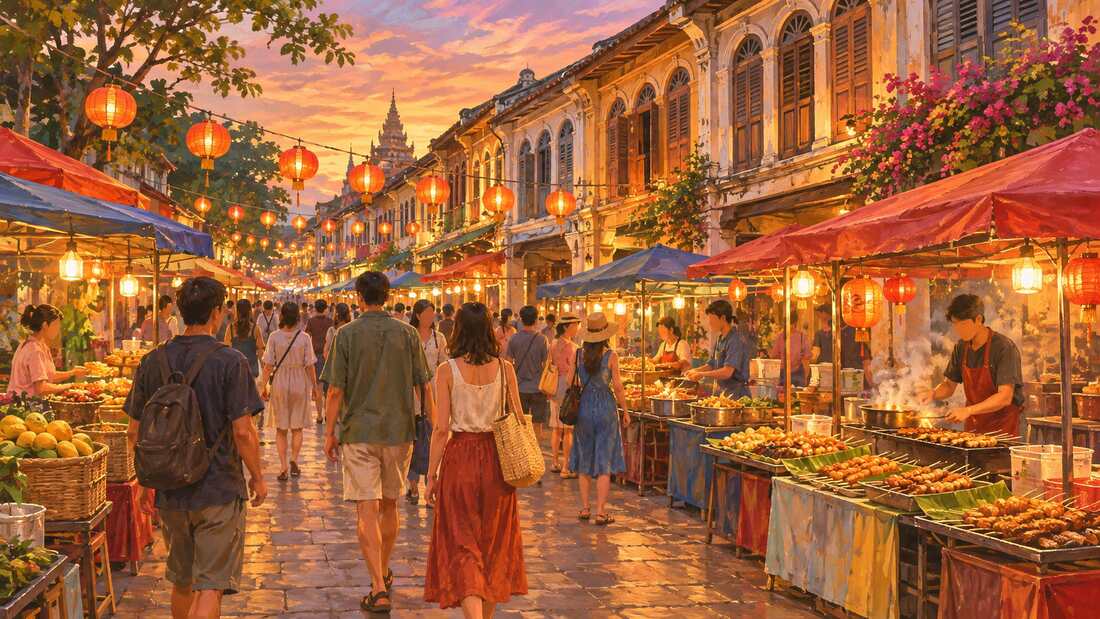
Mornings are cooler and quieter for walking and photography. On Sunday evenings Thalang Road closes to traffic for the walking street market, known locally as Lard Yai, with food stalls, crafts and music. UNESCO also highlights the annual Old Town Festival, which celebrates local food, crafts and folk art, and the Vegetarian Festival in the ninth lunar month brings the shrines to life with processions.
Getting there and planning your day
- Location. Phuket Town is on the east side of the island, about 30 to 40 minutes by road from Patong, Kata or Karon.
- Combine it. A day can start at the Old Town, continue to Wat Chalong and the Big Buddha, and end at sunset at Promthep Cape.
- Dress. Light clothes are fine in the streets; cover shoulders and knees if you enter a shrine or temple, as our temple etiquette guide explains.
- Staying in town. Phuket Town suits travellers who want food and culture over beaches. Our where to stay guide compares it with the beach areas, and ThailandWiki’s Phuket Old Town guide covers hotels, cafes and restaurants in the quarter.
Key takeaways
- Phuket Old Town is the historic centre of Phuket Town, built on wealth from the tin-mining boom of the late 19th and early 20th centuries.
- Its Sino-Portuguese shophouses line Thalang, Dibuk, Krabi, Phang Nga and Yaowarat roads, with Soi Rommanee the most photographed lane.
- Chinpracha House (1903) and the Thai Hua Museum (a 1934 school) explain the Hokkien and Baba history.
- Phuket became a UNESCO Creative City of Gastronomy in 2015, and the Sunday walking street on Thalang Road is the best time to try Baba food.
Common questions
Is Phuket Old Town worth visiting?
Yes, especially for anyone interested in history, architecture or food. It shows a side of Phuket that the beaches do not: the tin-mining town of Hokkien and Baba families, with shophouses, shrines, museums and some of the island’s best local food.
What is Sino-Portuguese architecture?
It is the local name for buildings that combine a Chinese shophouse layout with European decoration such as arches, shutters and stucco. The style came to Phuket with Hokkien merchants from Penang and Malacca during the tin boom.
When is the Phuket Old Town Sunday market?
The walking street market, Lard Yai, runs on Sunday evenings on Thalang Road, which closes to traffic. Check locally, as it can pause in heavy rain or for holidays.
How long do you need in Phuket Old Town?
Half a day is enough to walk the main streets, see Chinpracha House or the Thai Hua Museum and eat lunch. Stay into the evening on a Sunday for the market.
Why is Phuket a UNESCO City of Gastronomy?
UNESCO gave Phuket the title in 2015 for its distinctive cuisine, which blends Hokkien Chinese, Peranakan, Malay and southern Thai cooking, and for festivals that keep traditional know-how alive.
How we put this together: the history and street names come from Wikipedia’s Phuket Old Town article; the Chinpracha House facts from the Thailand Tourism Directory; the gastronomy designation from UNESCO, Thailand’s Public Relations Department and The Nation. Market days and opening times change, so check locally before you go.