
In short: At any temple or shrine in Phuket, cover your shoulders and knees, take your shoes off before entering a hall with a Buddha image, keep your feet pointed away from images and monks, and never climb on statues. Women should not touch a monk or hand him anything directly. These rules come from the Tourism Authority of Thailand and the Thai government’s own visitor guidance, and they apply at the Big Buddha, Wat Chalong and the Old Town shrines alike.
Updated 19 November 2026 by Phuket Big Buddha Guide editors
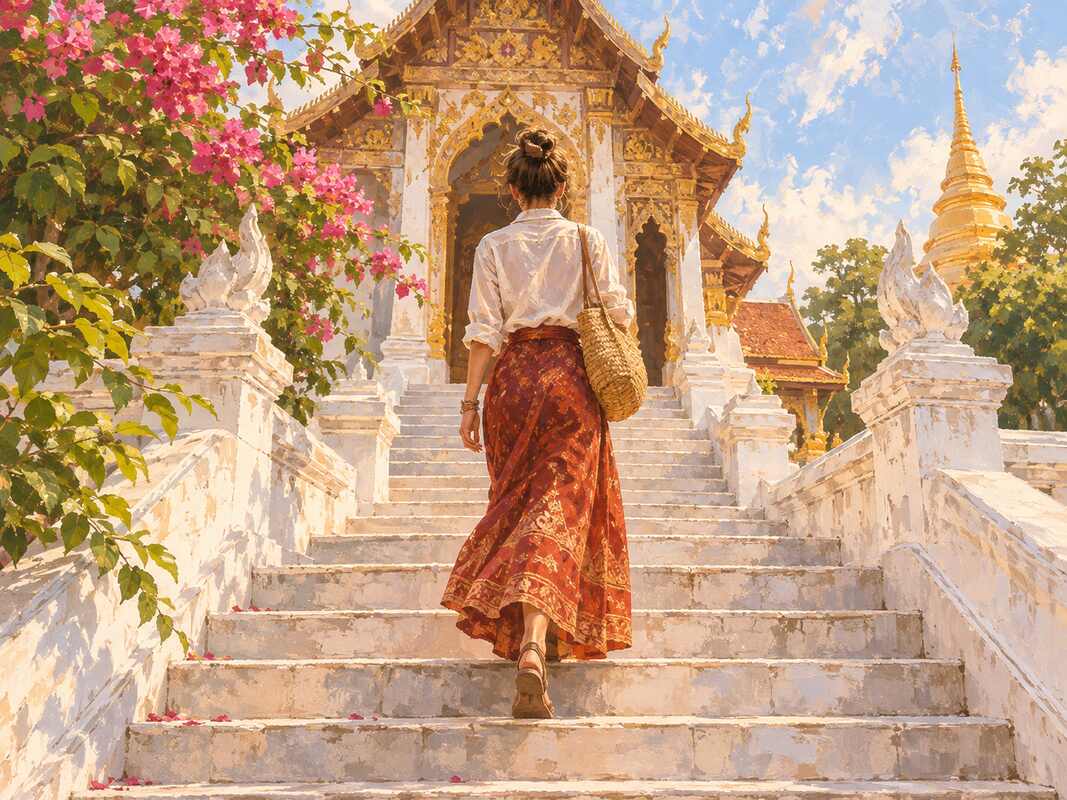
Thai temple etiquette is simple once you know it. Phuket is a beach island, but its temples are working places of worship. The Big Buddha on Nakkerd Hill, Wat Chalong and the Chinese shrines of the Old Town all receive local worshippers every day, alongside visitors. A few simple habits, starting with the temple dress code, make a visit smoother and show respect.
This guide sets out the rules, based on guidance from the Tourism Authority of Thailand (TAT) and the government’s Thailand.go.th portal. Our guide to visiting the Big Buddha covers that site’s own opening hours and the sarongs handed out at the gate.
What is the dress code for Thai temples?
TAT’s rule is that clothes for the beach are not clothes for a temple. For men, that means a shirt with sleeves and long trousers or shorts that cover the knees. For women, it means a top with sleeves, not spaghetti straps, and a skirt longer than knee length, or trousers. The government’s Thai temple travel guide adds that clothes should not be see-through, too tight or too loose, and that sleeveless tops and crop tops should be avoided.
- Wear: a T-shirt or blouse that covers the shoulders, loose trousers or a long skirt, and sandals that come off easily.
- Avoid: tank tops, crop tops, swimwear, short shorts, short skirts and see-through fabrics.
- Carry: a light scarf or sarong to cover up if needed. Some temples lend or rent wraps at the entrance.
TAT also notes that sandals should have a strap at the back if you are not wearing shoes. Clothing printed with Buddha images is considered disrespectful by many Thais, so leave it at the hotel.
Temple etiquette for shoes, thresholds and hats
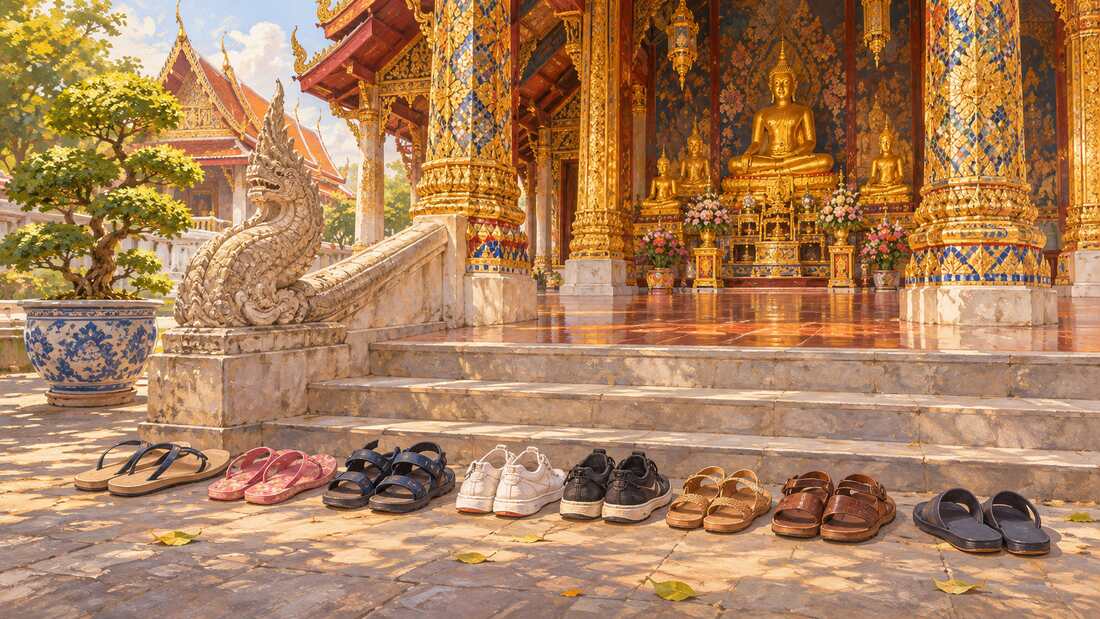
Take your shoes off before entering the ordination hall (ubosot), the assembly hall (wihan) or any building with a Buddha image. Thailand.go.th asks visitors to leave them on the shoe rack near the door. You can usually keep shoes on in the open grounds.
Step over the raised wooden threshold at the door rather than on it. Remove hats and sunglasses inside, put your phone on silent and keep your voice down.
Buddha images and how to sit in Phuket temples
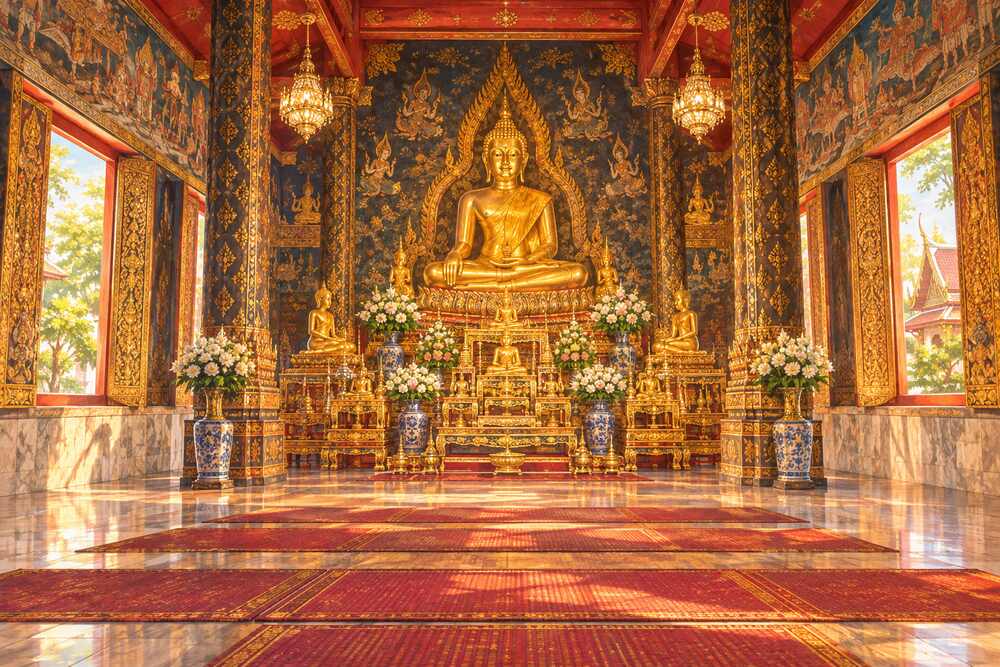
Buddha images are sacred, whatever their size. Do not touch them, point at them or climb on their bases, and never put yourself higher than an image for a photo. Walk around a Buddha image or a chedi clockwise, keeping it on your right.
Inside a hall, sit on the floor with your legs folded to one side or tucked behind you, so that the soles of your feet point away from the image, the monks and other people. Thais regard the feet as the lowest part of the body, and the government’s visitor advice warns against using feet to point at people or objects.
Thai temple etiquette with monks
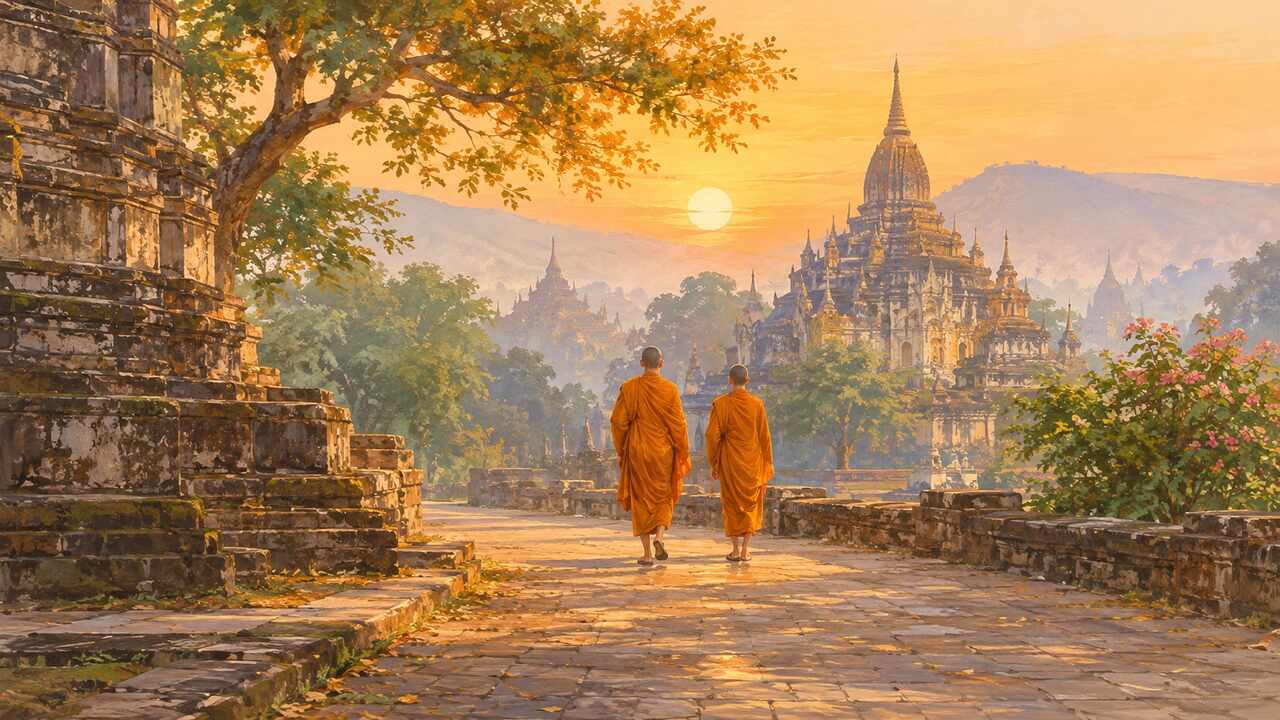
Monks follow strict monastic rules. TAT’s guidance is that women are not allowed to touch a monk or his robes. If a woman wants to give a monk something, she can pass it to a man to hand over, or place it on a cloth or table within the monk’s reach. On a crowded path or bus, leave a monk some space.
Men and women alike should not stand over a seated monk while talking to him, and should lower their heads slightly when walking past.
Offerings, photos and donations
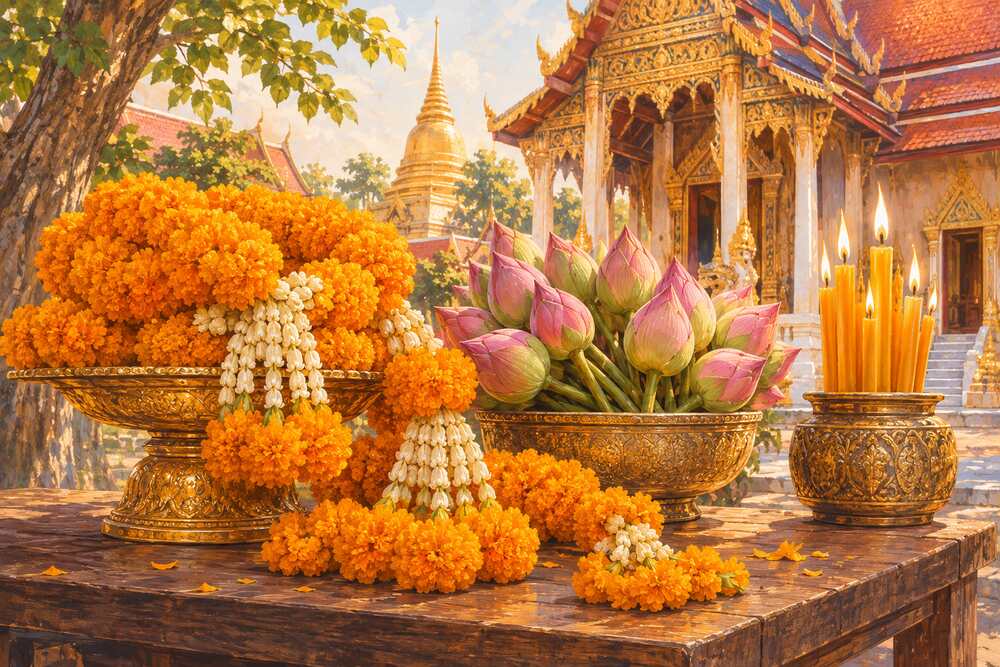
Visitors may make offerings. Flowers, candles and incense are sold at most temples, and you can light incense and place flowers on the offering table as Thai worshippers do. Donations go in the boxes provided.
- Photos. Most temple grounds allow photography, but some halls do not. Look for signs, avoid flash near old murals and do not photograph people praying without asking.
- Affection. Thailand.go.th asks visitors not to hug or kiss in religious places.
- Heads. Do not touch anyone’s head, including a child’s.
Chinese shrines and the Vegetarian Festival
Phuket’s Chinese shrines, such as Jui Tui and Bang Neow in the Old Town, follow similar courtesy: modest dress, quiet voices and no climbing on altars. During the Vegetarian Festival in the ninth lunar month, devotees wear white and avoid meat, and visitors are asked to wear white too if they join the crowds near the shrines.
Key takeaways
- TAT’s rule: men wear sleeves and trousers or knee-length shorts; women wear sleeves and a skirt below the knee or trousers.
- Take shoes off before entering any hall with a Buddha image, and step over the threshold.
- Keep feet pointed away from Buddha images and monks, never climb on statues, and walk clockwise around sacred objects.
- Women should not touch a monk or hand him anything directly; place it down or pass it through a man.
Common questions
Can I wear shorts to a temple in Thailand?
Only shorts that cover the knees, according to TAT’s guidance for men. Short shorts and swim shorts are not acceptable, and stricter sites refuse shorts altogether. Long trousers or a long skirt are the safe choice.
Do I need to cover my shoulders at the Big Buddha?
Yes. The Big Buddha is an active religious site, and visitors are expected to cover shoulders and knees. Wraps are available at the site, but it is easier to arrive dressed for it.
Do you have to take your shoes off at Thai temples?
Yes, before entering any hall or building with a Buddha image. Leave them on the rack by the door. Shoes are usually fine in the open grounds.
Can women touch monks in Thailand?
No. TAT’s guidance is that women should not touch a monk or his robes. To give him something, place it on a cloth or table near him, or pass it through a man.
Is it rude to point your feet at a Buddha image?
Yes. Feet are considered the lowest part of the body, so sit with your feet folded to the side or tucked behind you, pointing away from images, monks and people.
How we put this together: the dress code and behaviour rules come from the Tourism Authority of Thailand’s temple etiquette guidance and from the Thai government’s Thailand.go.th visitor pages; the Royal Thai Embassy’s advice on local customs was used as a cross-check. Rules can be stricter at individual temples, so follow the signs at the entrance.