
In short: Promthep Cape, or Laem Phromthep, is the southernmost point of Phuket, a grassy headland between Nai Harn and Rawai beaches. It is the island’s best-known sunset viewpoint. Beside the viewpoint stand the Kanchanaphisek Lighthouse, built in 1996 for the 50th anniversary of King Bhumibol’s reign, and a shrine to the Hindu god Brahma surrounded by hundreds of elephant figures. Entry is free and the cape is open at all hours.
Updated 19 November 2026 by Phuket Big Buddha Guide editors
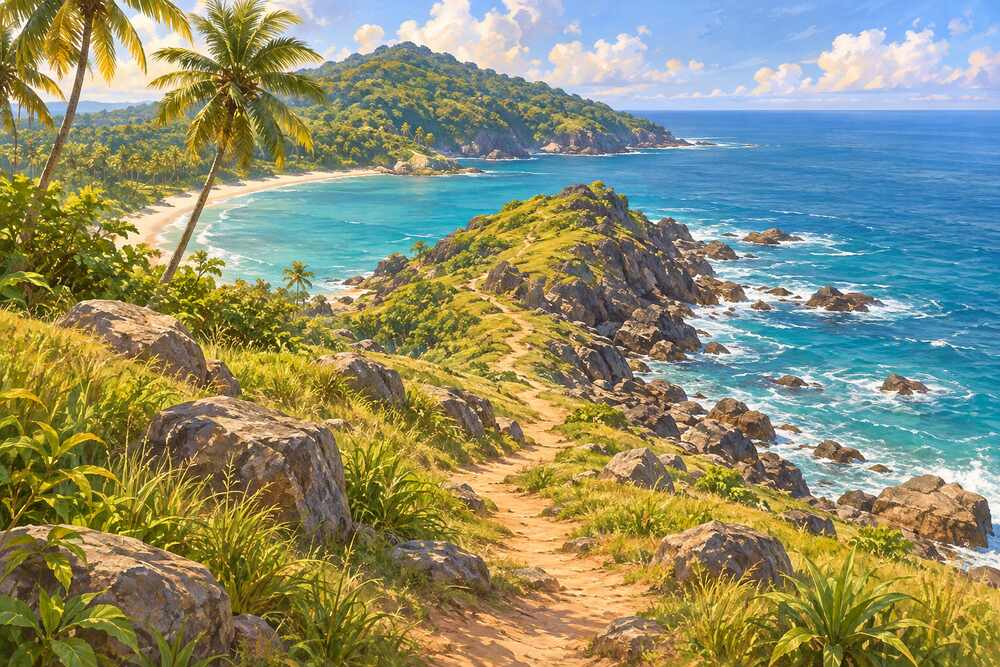
Phuket’s south coast ends in a ridge of grass and rock that runs down into the Andaman Sea. This is Promthep Cape. The Tourism Authority of Thailand calls it one of the most photographed places on the island, and on a clear evening hundreds of people gather on the terrace to watch the sun go down behind the islands.
It is a short drive from the Big Buddha and Wat Chalong, so many visitors end a day of temples here. This guide covers what the cape is, its lighthouse and shrine, the best time to come, and practical tips.
What is Promthep Cape?
Promthep Cape (Laem Phromthep in Thai) is the southernmost point of Phuket. TAT places it at the very southern end of the island between Nai Harn and Rawai beaches, and notes that locals also call it Laem Chao. In Thai, laem means cape, and Phromthep combines Phrom, the Thai name for the Hindu god Brahma, with thep, meaning god.
The site has three parts: the main viewing terrace at the top of the hill, the lighthouse and shrine beside it, and a path that runs down the spine of the headland towards the tip. Below the cliff are small offshore islands, including Koh Kaew.
The Kanchanaphisek Lighthouse
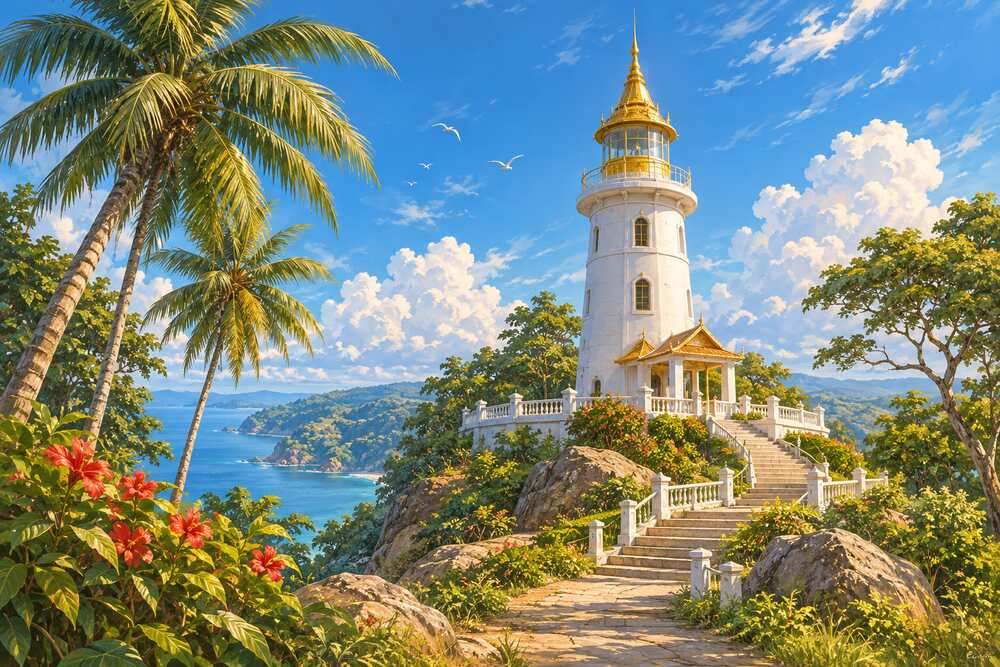
The white tower on the hill is the Laem Phromthep Kanchanaphisek Lighthouse. TAT says it was built for the Golden Jubilee of King Rama IX’s accession to the throne, and its light can be seen up to 39 kilometres out to sea. It was completed in 1996, the jubilee year.
Phuket 101 notes that the tower itself is 19 metres tall, with the cliff lifting the light about 95 metres above the sea, and that it is a working light that flashes every nine seconds. Inside, TAT describes an exhibition on the lighthouse’s origins and construction, Thailand’s standard time and a display of the day’s sunrise and sunset times. A staircase leads to a viewing gallery.
The Brahma shrine and its elephants
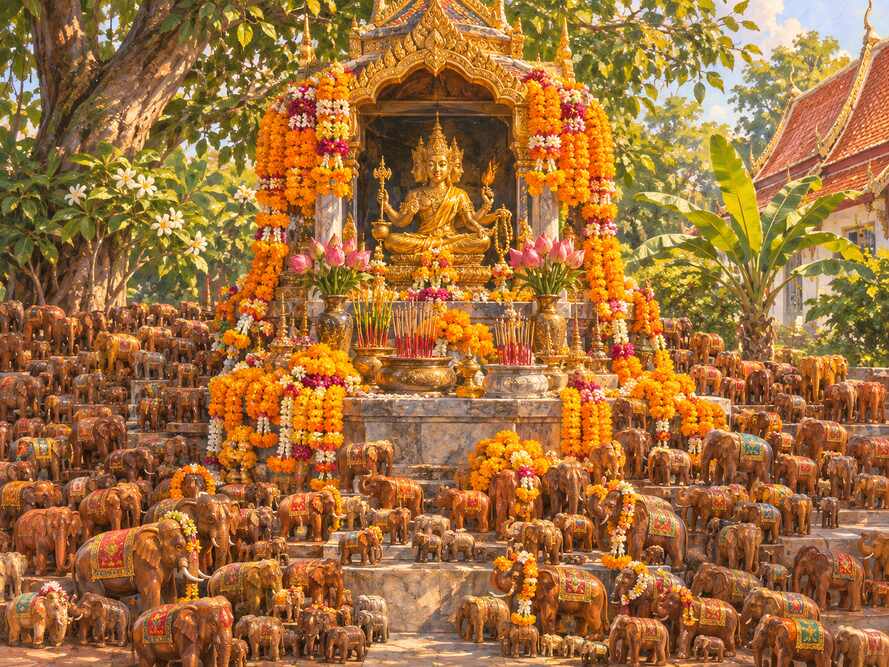
Next to the lighthouse, under the trees, is a shrine to Phra Phrom, the four-faced Brahma who gives the cape its name. It is surrounded by elephant figures of every size and colour. Thai visitors come to make a wish with garlands, candles and incense, and those whose wish comes true return with an elephant figure to give thanks, so the collection keeps growing.
The shrine is an active place of worship. Dress modestly, keep your voice down and do not move or climb on the figures. Our temple etiquette guide covers the basics that apply here too.
When is the best time to visit Promthep Cape?
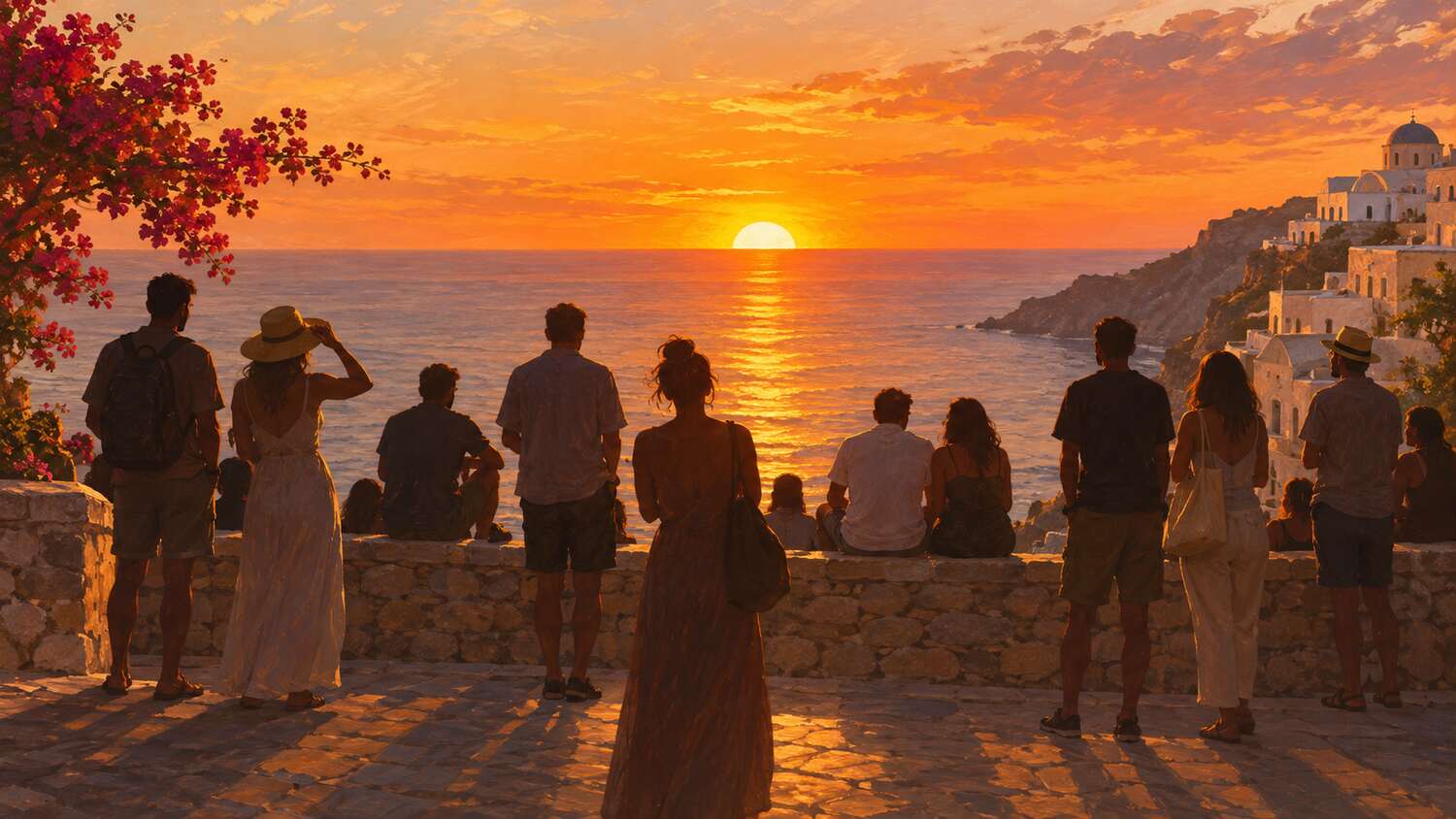
Sunset is the reason most people come. In Phuket the sun sets at roughly 6.00 to 6.50 pm through the year, earliest around November and latest around May. The best places along the wall fill 30 to 45 minutes before sunset in high season, and parking fills early on clear evenings.
- High season, December to March. The clearest skies and the biggest crowds.
- Wet season, May to October. Fewer people and dramatic clouds, but sunsets can be hidden.
- Early morning. Quiet and cool, good for walking the path to the tip, though the sun rises behind the island.
Walking down the cape
From the terrace, a rough path runs down the ridge towards the tip of the headland. It is steep in places, with loose stones and no railings, so wear proper shoes, take water and avoid it after rain or in the dark. The view back to the lighthouse and across to Nai Harn is the reward.
Photography tips and quieter spots
The main terrace gives the classic view west over the sea, but it is not the only place to stand. The lighthouse gallery is higher and less crowded, and TAT names it as the place to look out towards the islands on a clear day. The path down the headland gives a side view of the sunset with the lighthouse behind you. For a different angle, the Windmill Viewpoint above Nai Harn looks back at the cape from the north. Bring a light jacket for the wind, and expect the road back to be slow for half an hour after sunset.
Getting there and nearby
- By road. The cape is on the coast road between Rawai and Nai Harn, about 20 minutes south of Kata and about 30 minutes from Chalong by road.
- Cost. Entry is free; there is a car park and food stalls by the terrace.
- Nearby beaches. Nai Harn, just to the north, is the closest place to swim; Rawai is a fishing village with seafood restaurants on the east side.
- A full day in the south. Start with Phuket Old Town in the morning, visit Wat Chalong and the Big Buddha in the afternoon, and finish at Promthep for sunset.

Key takeaways
- Promthep Cape (Laem Phromthep) is the southernmost point of Phuket, between Nai Harn and Rawai beaches.
- The Kanchanaphisek Lighthouse was built in 1996 for King Bhumibol’s Golden Jubilee; its light is visible up to 39 km out to sea.
- Beside it, a shrine to Brahma (Phra Phrom) is surrounded by elephant figures left as thanks for granted wishes.
- Entry is free and the cape is always open; arrive 30 to 45 minutes before sunset in high season.
Common questions
What time is sunset at Promthep Cape?
Between about 6.00 pm and 6.50 pm depending on the month, earliest in November and latest around May. Arrive 30 to 45 minutes early in high season to find a place on the wall.
Is Promthep Cape free?
Yes. There is no entry fee for the viewpoint, the shrine or the lighthouse exhibition, and the area is open at all hours.
Why are there elephants at Promthep Cape?
The elephant figures surround a shrine to Phra Phrom, the Thai form of Brahma. Visitors make a wish there, and those whose wish comes true return with an elephant figure as thanks.
Can you go inside the Promthep lighthouse?
Yes. The Kanchanaphisek Lighthouse has a small exhibition on its construction and on Thai standard time, with the day’s sunrise and sunset times, and stairs to a viewing gallery.
How far is Promthep Cape from the Big Buddha?
Both are in the south of the island. The drive from the Big Buddha’s access road at Chalong to the cape takes roughly 25 to 30 minutes, which is why many people combine them in one afternoon.
How we put this together: the location, lighthouse range and exhibition come from the Tourism Authority of Thailand; the tower height, flashing pattern and shrine custom from Phuket 101, cross-checked with other local guides. Sunset times are approximate; check a sunset table for your date.