
In short: The Phuket Big Buddha is a seated white marble Buddha 45 metres high and 25.45 metres wide on Nakkerd Hill, between Chalong and Kata in the south of Phuket. Its official name is Phra Phutta Ming Mongkol Eknakiri. Building began in the early 2000s and was funded by donations. The site closed after a deadly landslide below the hill in August 2024 and reopened on 3 March 2026 under the management of Wat Kittisangharam (Wat Kata).
Updated 19 November 2026 by Phuket Big Buddha Guide editors
This page explains what the Big Buddha is, how it was built and what changed after 2024. For opening hours, the dress code and how to get there, see our guide to visiting the Big Buddha. We wrote it in November 2026 from the sources listed at the end.
Some terms first. Maravijaya (Thai: Maravichai) is the seated Buddha posture with the right hand touching the earth, showing victory over the demon Mara. Wat is the Thai word for a Buddhist temple. Rai is a Thai unit of land of 1,600 square metres.
What is the Phuket Big Buddha?
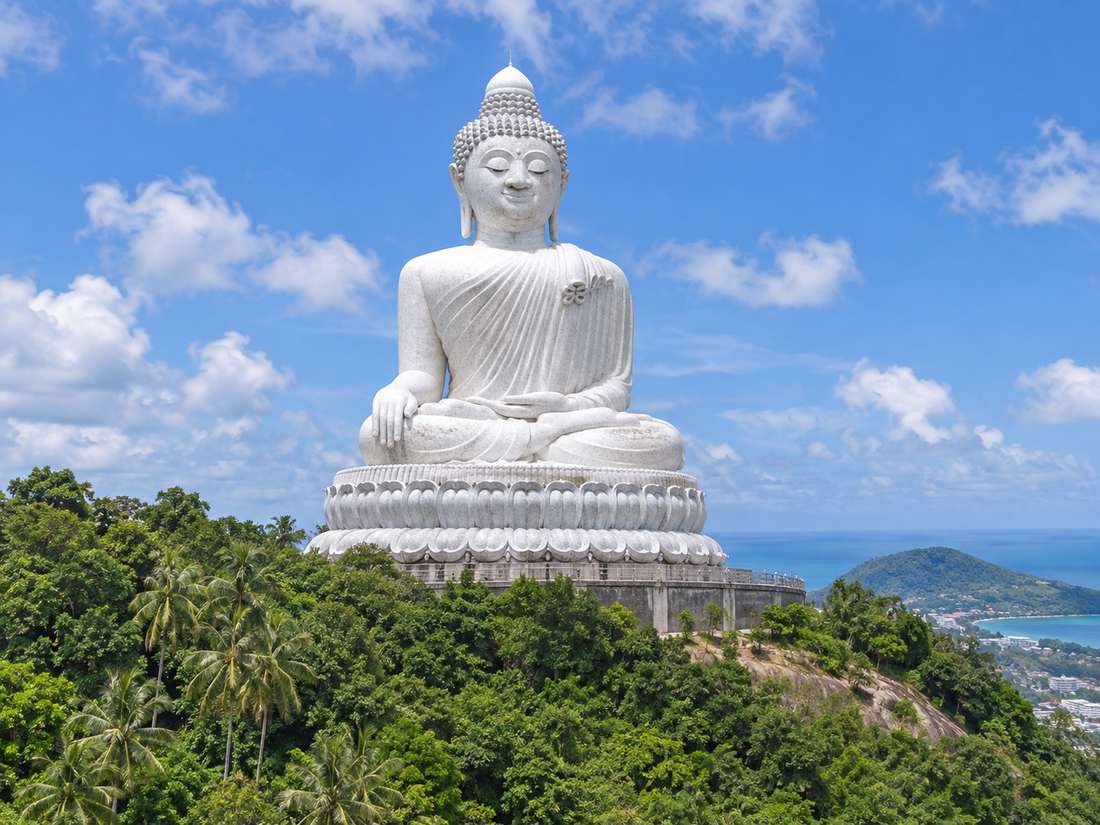
The Big Buddha is a modern statue of the Buddha seated in the Maravijaya posture. Wikipedia gives its height as 45 metres and its width as 25.45 metres, and the same figures appear on the Tourism Authority of Thailand page for the site. It is visible from much of southern Phuket and looks east over Chalong Bay.
The statue is not a museum piece. It is a working place of worship, and since its 2026 reopening it has been run as part of a temple. Visitors come to pray, to make merit and to see the view.
The name and what it means
The official name is Phra Phutta Ming Mongkol Eknakiri (Thai: พระพุทธมิ่งมงคลเอกนาคคีรี), shortened to Ming Mongkol Buddha. Wikipedia explains that the name blends Thai, Sanskrit and Pali words and translates it as “The Cherished Auspicious Lord Buddha atop Naga Hill”. The spelling varies a lot in English, from Akenakiri to Eknakkhiri, because it is transliterated from Thai.
The Thailand Tourism Directory, run by Thailand’s Department of Tourism, says the name was given by the Supreme Patriarch of Thailand on 19 August 2008. The hill itself is called Nakkerd, also spelt Nagakerd.
Size, materials and construction
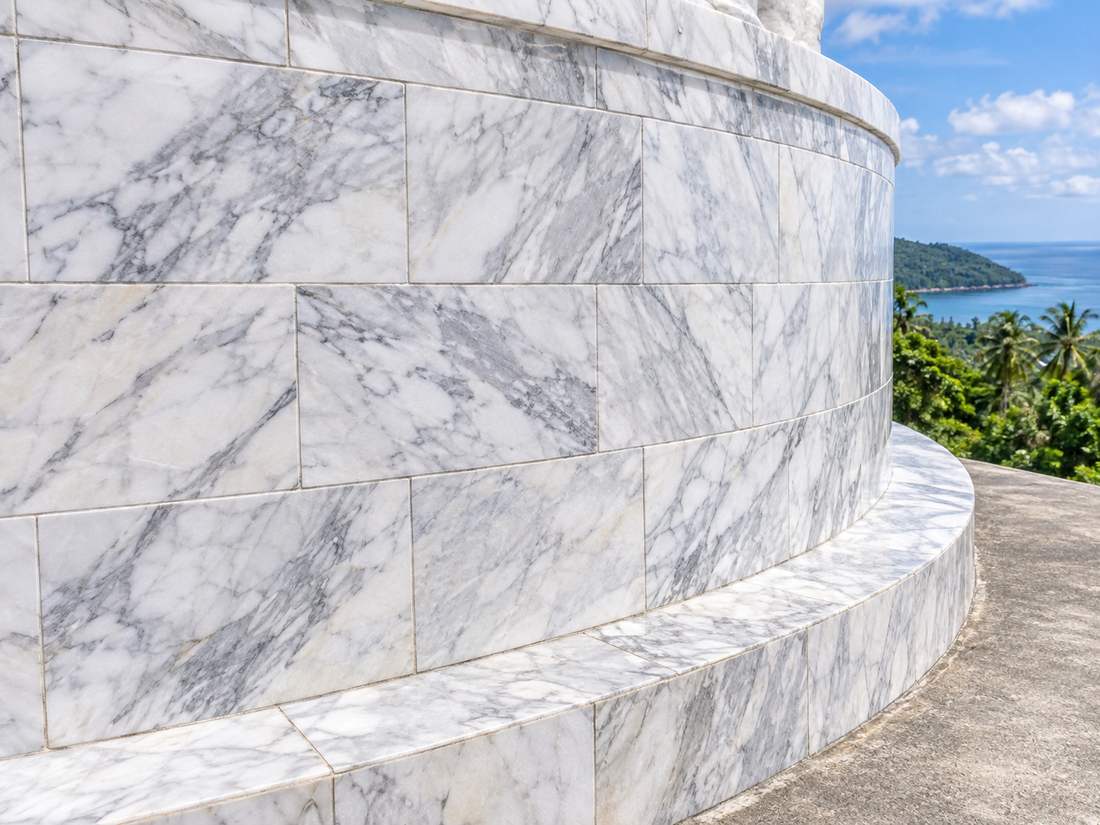
The statue is reinforced concrete covered in white Burmese marble. The Tourism Authority of Thailand describes the marble as white and jade “Suriyakanta” marble imported from Myanmar weighing about 135 tonnes, and the Thailand Tourism Directory gives the same weight over an area of about 2,500 square metres.
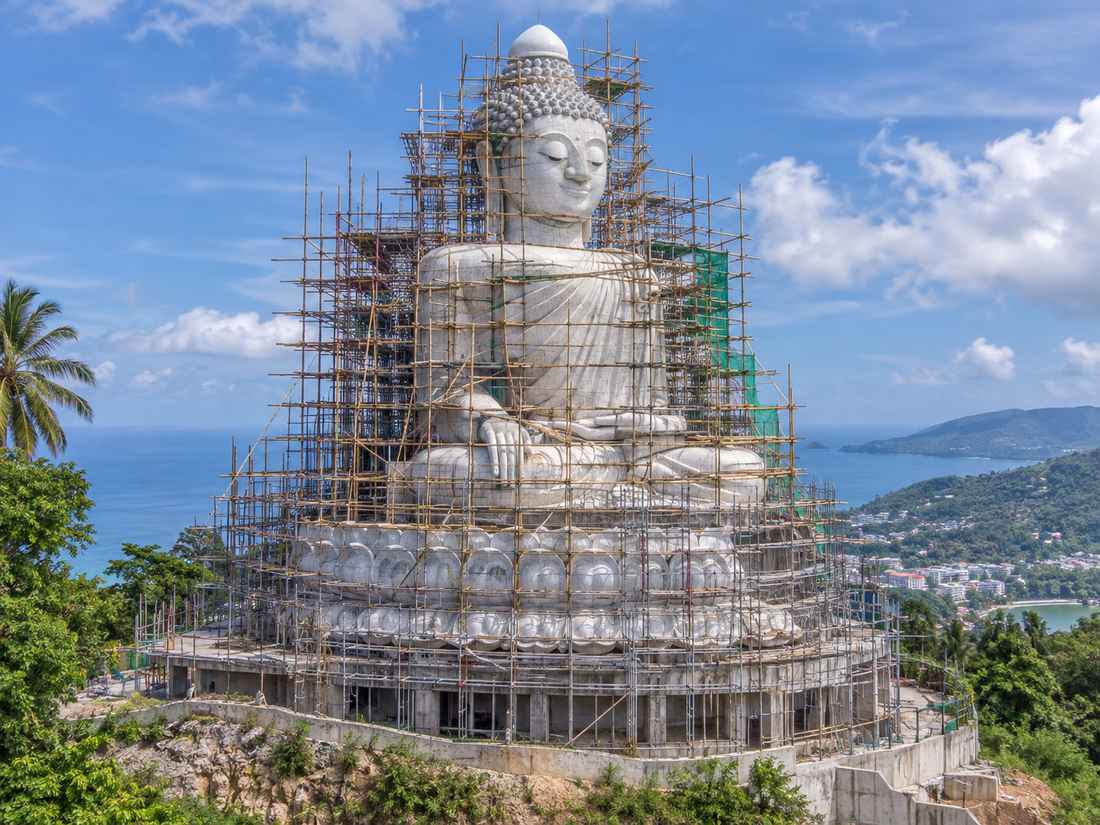
Sources disagree on when building started. Wikipedia’s article gives 2004 in its text and 2002 in its summary box, while German Wikipedia gives 2002. Most English sources use 2004. The project was paid for by donations from visitors and local people, and the base was still described as unfinished for many years after the statue itself was complete.
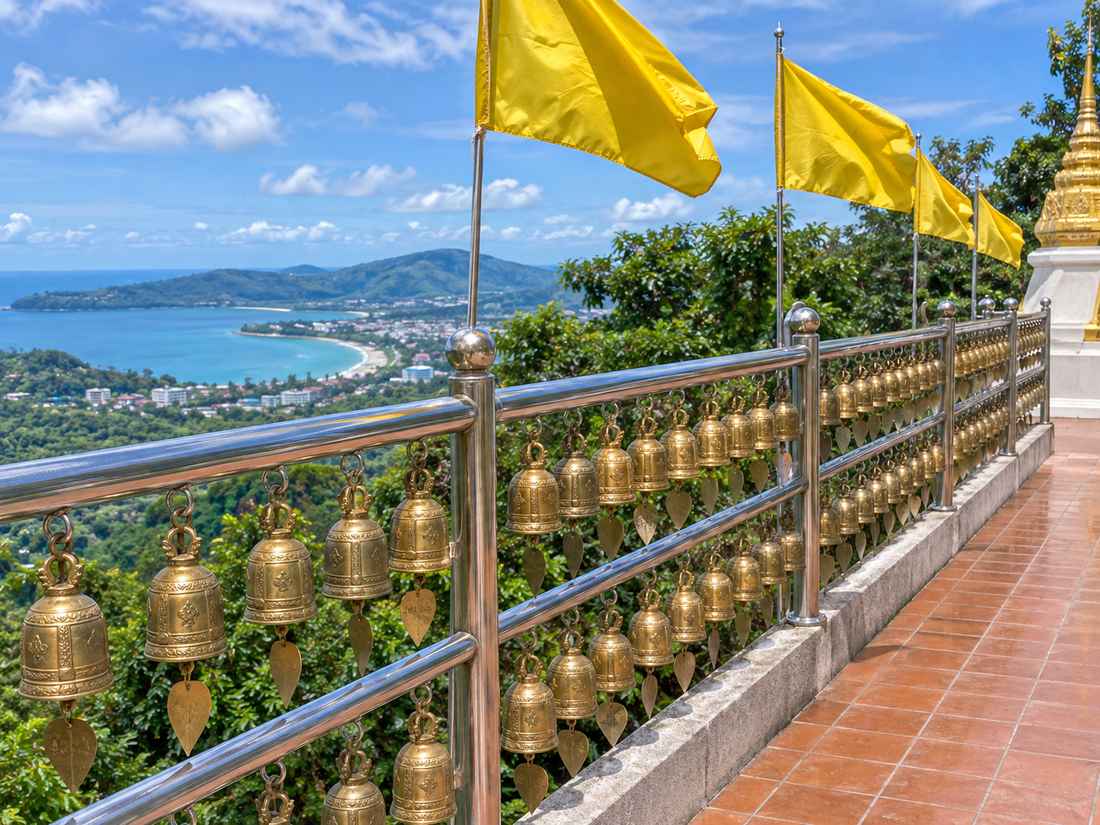
The statue shares the hilltop with shrines, rows of bells and viewing terraces. On a clear day the platform gives a view over Chalong Bay, Kata, Karon and Phuket Town.
| Fact | Figure | Source |
|---|---|---|
| Height | 45 m | Wikipedia; TAT |
| Width | 25.45 m | Wikipedia; TAT |
| Cladding | White Burmese marble, about 135 tonnes | TAT; Thailand Tourism Directory |
| Name granted | 19 August 2008 | Thailand Tourism Directory |
| Building began | 2004 (some sources say 2002) | Wikipedia |
| Reopened | 3 March 2026 | The Phuket News |
The 2024 landslide and closure
On 23 August 2024, after heavy rain, a landslide swept down the hillside below the site into homes in the Kata area. The Phuket News reports that it killed 13 people, injured 19 and damaged or destroyed more than 50 houses. The Big Buddha site was closed while safety and legal questions were investigated.
Residents affected by the landslide brought a class action against the foundation that had run the site, and The Phuket News reported in January 2026 that the Phuket Provincial Court had accepted the case. The site opened briefly for merit-making over New Year, from 31 December 2025 to 3 January 2026, and then closed again (The Phuket News).
We include this history because it matters to people who live below the hill. Some residents still worry about landslide risk, and the legal case was continuing when we wrote this page.
How did the Big Buddha reopen?
The site reopened on 3 March 2026, Makha Bucha Day. According to The Phuket News, it is now managed solely by Wat Kittisangharam, the official name of Wat Kata, under the name “Wat Kittisangharam (Big Buddha)”, with five monks stationed on the hill. The paper reported that the temple said the site would open daily from 9am to 6pm.
The reopening covers an approved area of about 15 rai and is subject to 25 conditions set by the Forestry Department, according to The Phuket News. The conditions include marking the site boundaries, allowing regular inspections and not building new permanent structures without permission. Temple officials said donations would cover running costs and maintenance.
Where the Big Buddha sits
Phuket is Thailand’s largest island, covering 543 square kilometres, with a mountain range running down its western side (Wikipedia: Phuket province). Nakkerd Hill is one of the high points of the southern half of the island. The statue stands between Chalong on the east coast and Kata and Karon on the west, so it can be seen from both sides.
The Phuket Escape guide puts the platform at about 381 metres above sea level, though other sources round it to 400 metres. The site is reached by a winding road of about 6 km that climbs from Chaofa Road West near Chalong. Wat Chalong, Phuket’s best-known temple, is about 15 minutes away by car, which is why most visitors see the two on the same day. Our Wat Chalong guide covers that temple, and our guide to other Phuket temples covers the older sites further north.
Visiting the Big Buddha respectfully
The Big Buddha is an active Buddhist site, not only a viewpoint. Cover your shoulders and knees, take your shoes off where signs ask you to, and keep your voice down near the shrine rooms. Sarongs are usually available to borrow at the entrance. Our guide to Thai temple etiquette explains the rules in more detail, and Promthep Cape, about half an hour’s drive south, makes a good sunset stop on the same afternoon.
Key takeaways
- The Big Buddha is 45 m high and 25.45 m wide, made of concrete clad in white Burmese marble.
- Its official name, Phra Phutta Ming Mongkol Eknakiri, was granted in 2008.
- It was built from donations, starting in the early 2000s.
- A landslide below the hill on 23 August 2024 killed 13 people and closed the site.
- It reopened on 3 March 2026, run by Wat Kittisangharam (Wat Kata).
Common questions
What should I wear to the Big Buddha?
Clothes that cover your shoulders and knees, as at any Thai temple. Sarongs are usually available at the entrance. See our Thai temple etiquette guide.
How tall is the Phuket Big Buddha?
It is 45 metres high and 25.45 metres wide, according to Wikipedia and the Tourism Authority of Thailand.
Is the Big Buddha open again?
Yes. It reopened on 3 March 2026 after being closed following the August 2024 landslide. Check hours locally, as they can change for ceremonies or bad weather.
Who runs the Big Buddha now?
Wat Kittisangharam, also called Wat Kata, manages the site under conditions set by the Forestry Department.
What is the Big Buddha made of?
Reinforced concrete covered in white marble from Myanmar, weighing about 135 tonnes in total.
Is this website the official Big Buddha site?
No. This is an independent guide. It is not run by the temple, Wat Kata or any foundation, and it cannot take donations.
How we put this together: statue facts come from Wikipedia, the Tourism Authority of Thailand and the Thailand Tourism Directory. Closure and reopening details come from reporting in The Phuket News between January and September 2026. Where sources disagree, as on the start date, we give both. Checked in November 2026.
Sources
- Wikipedia: Phuket Big Buddha
- Tourism Authority of Thailand: Phuket Big Buddha
- Thailand Tourism Directory: Big Buddha Temple
- The Phuket News: Big Buddha reopens (3 March 2026)
- The Phuket News: Big Buddha’s 25 conditions
- The Phuket News: The Slide, two years on
- Phuket Escape: Big Buddha guide
- The Phuket News: site remains closed after New Year opening